29.7.12

Visa Sagas: The Bio Chapter I Appreciate More and More

(from Eric McLaughlin)


Missionaries have a thing for autobiographies.  As in, for writing their own autobiography.  And it must be said that they have some great stories, so more power to them.  I have read several of them, including this one on the hospital we visited in 2007.  Tenwek has a pretty popular one.  


After you've read a couple, you will realize that there seem to be a few, unwritten, formulaic elements.  One of them is that there will be a chapter where the missionary describes how God answered their prayers by giving them a visa for a longer period of time, say four years or even (in the case of one I read from Rwanda) for a lifetime.

I have always found these chapters particularly hard to engage.  I mean, the people are entering foreign lands, starting new hospitals, treating exotic diseases, hunting large game animals, riding motorcycles, and getting trapped in civil wars.  Just to name a few.  I mean, can't they just skip the immigration office and get back to the part where they have to stave off dehydration by drinking milk from the mammary glands of the wildebeest they just shot? 
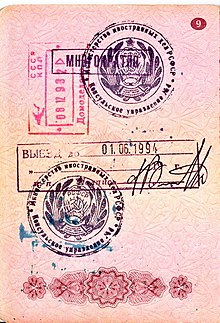

No, they can't, and I must say that I think I'm coming to see their point of view.  Because the visa is so essential.  We have known multiple families who had to fly out of the country, at least temporarily, to deal with visa troubles, which is both expensive and disruptive to life and work.  Not to mention the time in going back and forth to the capital city's immigration office.

So it was that we trekked down to Atlanta for our French visa appointment, without which we couldn't depart for language school, just over a month away at the time.  Mountains of paperwork after streams of emails and trying to sift through confusing lists of requirements online.  We thought it went well, with only one more piece of documentation to send in.

And then we waited.  They would mail it to us when it was complete.  And it should be ready, though if there were further problems, it might easily encroach on our departure time.  We prayed, and remembered those under-appreciated biography chapters.

Yesterday we got the word:  Our four passports delivered with one-year visas to France.  In pretty record time, actually.  The work God has started, he is faithful to complete.  This means that Carlan is the only person still waiting on his visa, and his appointment is coming up soon.


We are not writing a book.  And though I still wouldn't include a chapter on God's faithfulness in the visa process, I do have a growing appreciation for it.  So, maybe just a blog post.

23.7.12

School Book Selection

(from Heather)

Another check mark on the Burundi preparations to-do list. Order Homeschool Materials. Check.

We are so thankful that Sarah has joined the McCropder team to be the teacher for the seven children on the team. We love the fact that Sarah is both qualified and eager to start up a great one-room schoolhouse when we get to Burundi. Next we needed to collaborate and choose a curriculum for this unique little school.

First we gathered recommendations from a few families who have successfully homeschooled some fabulous young people. We really appreciate the advice, expertise, and hand-me-down supplies from these experienced families.

In May, Sarah, Jessica, and I attended a largely-inspiring-and-somewhat-overwhelming conference all about homeschooling. Between sessions, we perused an exhibit hall full of curriculum options, and we discussed our research findings. The blurry picture captures the way that my head was swimming with all the different theories and series of educational materials.
We summarize the conference this way: There are a LOT of great options out there in the homeschooling world of books and resources.

Taking into account many factors of our team's situation, we arrived at the choice of a Sonlight Curriculum for core subjects like language arts and science. Sonlight is a literature-rich schooling design which is flexible to meet the educational needs of the McCropder team kids and teacher. Driving home from the conference, Jess and I drew up this concise temporary curriculum plan for the next few years

Then we split up the remaining non-core subjects, including math, art, music, and PE. We researched, conferred, and selected. Dozens of emails later, school books and supplies have been chosen and ordered for all seven kids on the team for the first few years in Burundi.

We look forward to really starting school when we get to Kibuye. Next year in France, the kids go to French schools, with supplementary curriculum at home as well (Five in a Row books for Anna, for example).

One thing we still need is a name for our one-room schoolhouse in Burundi. Any ideas? Please let us know with a comment if you have a suggestion.

18.7.12

COTW: Ergotism, or A Little Progress on the Enduring Mysteries


(from Eric McLaughlin)


First off is her age.  She was "elderly".  In the rural villages of Africa, exact age is hard to come by in the geriatric population.  But this was ridiculous to the point of funny.  When the intern called me to admit her, she was 102.  The next day we discovered she was 70.  A beautiful 70 with a joyful disposition.

Second is that she was actually admitted for pneumonia with reactive bronchospasm or COPD (usually in the elderly from a lifetime of living in a house with cook-fire smoke).  She looked pretty comfortable, but we couldn't check her oxygen level, because that requires placing a little monitor on your finger, and her fingers had a problem.


They were black.  And cold.  And they had been for several weeks, and they were getting worse, spreading up from the tips.  And her feet had a similar problem.

Wow.  This was strange.  We put our heads together.  We hypothesized.  We ran some tests. (For the medical types, her WBC was 20 after steroids, and her ESR was 17.)  We took some photos and emailed some specialists in the US.  

She was put on antibiotics and steroids for her lungs, which improved greatly.  And almost everything we could think of for this hand problem should have also gotten better with steroids.  But it didn't.  Her hands and feet were turning gangrenous before our eyes.  You can see the wasting of her fingertips in this close-up picture.

We all admitted we were stumped.  The surgeons had seen a similar case once a few months prior; a teenage girl with just the feet involved.  She had them amputated as a last resort.  The family for this lady wasn't interested in that direction, and she was eventually discharged home on hospice.

***

One of the lesser-recognized challenges of working in medicine in Africa is the mystery.  Patients have problems and you just don't know what it is.  That's hard enough, but I find myself wishing that at the end of every month I would get to see the answer key.  See what I got right, what I got wrong.  Not for my own knowledge, but so that next time, when I saw a similar patient, I would know better what to do.  And this is a perfect example.  The young girl with the feet.  Now the elderly lady with the same problem, and we still don't know.

***

Fast forward to last week.  I'm sitting in a big air-conditioned classroom at Johns Hopkins University, on the last day of my four weeks of tropical medicine school.  It couldn't be a more different setting.  The very last lecture is entitled "Unusual Tropical Diseases", meant to be a sort of relaxing show-and-tell prior to the final exam (I know, doctors have strange forms of relaxation).  Five cases into the list, the professor throws up a picture.  A young Ethiopian boy with unexplained gangrene.  Wasting.  Something clicks in my brain.  I've seen this before.  What is this?

Well, this case was called Ergotism.  It's caused by ingesting toxins from a fungus that grows with cereal crops.  In some cases, it causes convulsive or psychotic symptoms (and is interestingly theorized to be the cause of the bizarre behavior that spawned the Salem Witch Trials.  Again, doctors and their odd hobbies.)  But the other cases are gangrene, compatible with our two patients, who had the right environment for an exposure to this fungus.  There is a non-surgical treatment option, namely vasodilator therapy.

A little mystery made a little more clear, and we'll see if it comes to pass again.  The reality of these puzzles will continue to play a big role in our hospital development choices, especially as we are working with an educational system, where the benefit of a solid diagnosis not only may help the patient in front of you, but provides an educational foundation for each young doctor, who will likely see these problems again.

"It is the glory of God to conceal a matter; to search out a matter is the glory of kings." -Proverbs 25:2

13.7.12

My First Blog Post

Being the elementary teacher on the McCrodper team I will be celebrating many firsts in the years to come…first lost tooth, first book read, first soccer goal…you get the idea.  Today I celebrate my first blog post, because it is quite a God-story that on August 23rd I will board a plane bound for France with the rest of the McCropders. 
Application to French language school, French visa, raising support ….In my mind there just wasn’t enough time between May and August 23, but God in His goodness has had His hand on each logistic detail and in His perfect timing has paved the way. 

The McCropders and I overlapped in Kenya, but never met.  In fact I lived near another mission teaching hospital just a few hours from the McCropders.  How could our paths not cross!  God was weaving a better story so that I can only stand back and say “Look at what God did!”

I have been asked why join a team of doctors and why Burundi.  The simple answer: As a little girl I dreamed of being a medical missionary.  Instead I chose the quicker (and cheaper) route to a useable college degree and I wouldn’t trade my chalk for a stethoscope.  But, I anticipate a “take your teammate to work day” in which I get to wear scrubs and follow one of the doctors around at Kibuye Hope Hospital.  Jason has me believing that after assisting him with 10 C-sections I would be able to perform a C-section all by myself! 

The real answer: When I did meet the McCropders in March 2012 it became evident we were headed in the same direction.  Just as Hope Africa University and Kibuye Hope Hospital had a McCropder size hole, the McCropder team seemed to have a Crockett size hole.  Simply stated they needed a teacher and I needed a team.  As I have gotten to know the team, I have learned that I have only uncovered the tip of the iceberg of wonderful that the McCropders exude.  These guys are a great team and the story of how God has brought them together and led them to Burundi is incredible!  I am honored to join them!

I made a whirlwind visit to Burundi in late April 2012 to aid in making a final decision to go with the McCropders.  (Really all you need to do is meet the team and you’ll be sold.)  At dinner in Kibuye, I found myself sitting around the table with 5 other adults all of whom were medical.  Naturally the conversation involved terminology I either don’t usually discuss over dinner or I needed a dictionary to comprehend (context clues weren’t helping).  I enjoyed the humor of the situation and envisioned McCropder meals sounding similar.  My heart was gripped by stories of patients, medical students, and the doctors journey through Kibuye Hope Hospital.  I saw the great need and a better fit for me than I had envisioned – teaching missionary kids, learning to share and live the gospel with a rising generation of African doctors and nurses, and encouraging my teammates as they practice and teach medicine.  God is good! 

In honor of the fact that much of my material for this blog will generate from the McCropder kids, I will share a recent kid story that provided a small glimpse into the creative genius represented on this team.  I was sitting across the table from a McCropder kid and saw that said child (who definitely marches to the beat of their own drum) had a stuffed tiger, so I asked what the tiger says assuming I would get the typical response, “grrr”.  With a pensive brow furrowed, this child held the tiger up to their ear and listened for about 15 seconds, while I did my best to contain my laughter.  After the LONG 15 seconds was over, the tiger was lowered and I was informed that the tiger said “he doesn’t like girls!”

I am glad the tiger that doesn’t like girls didn’t have a say in whether I joined the team. 


7.7.12

Books for Burundi

Eric and I have been in Baltimore the past few weeks while he has been attending a tropical medicine course.  I was looking around for things to do with the kids while he was in school, and came across the most amazing place:  The Book Thing of Baltimore.  From their website: "Our mission is to put unwanted books into the hands of those who want them."  Basically, it's a three room "store" FULL of FREE BOOKS for the taking.  Over 200,000, apparently.  "What?!?!" we said.  "Free books?!?!?  Seriously?"  This would always be exciting news for us, but especially now that we are in the throes of packing our container for Burundi.  This is really our only chance to bring a significant library along with us.  Eric and I spent a large portion of our childhoods in the library, and we'd like a nice selection of books for our kids to read as  they grow up.

Also, I'm pretty sure there is nothing like a library in Burundi.  How great would it be to not only have books for our kids, and ourselves, but books to share with our community at Kibuye?  Not just medical books, but quality fiction and non-fiction as well?  So to that end, we went to Baltimore's Book Thing and picked up over 100 books.  Eric's on his way back there as I type this, actually.  It feels like we're getting away with something when we just walk out the door with boxes full of free books!  Totally awesome.

And it also got me wondering if any of our readers out there have books they'd like to contribute as well.  If any of you have young adult fiction or adult fiction/non-fiction that you've enjoyed and are now done with, contact us with the titles.  If it's not something we already have, and you can get it to Ann Arbor or Nashville (or maybe Philadelphia), we'll take it with us!  And if you're in Baltimore, lucky you.  Go check this place out!

4.7.12

Crate Party

By Jason

While the wild fires seem to be slowly getting under control in Colorado, things are revving up here in Ann Arbor on the packing front.  The strategy is to pack everything that is small enough to fit into a wooden crate.  These crates are then stacked inside the container to keep things organized so that we can utilize the space to its greatest potential.  Items that don't fit in these crates (piano, large pieces of medical equipment, etc) will be packed on top of the crates.  One great thing about this packing system is that the crates can be disassembled when we get to Burundi, and then we will have all this good wood with which we can build things in the hospital and our houses.

 So we needed approximately 40 of these crates built so that when the rest of the McCropders come to Ann Arbor to pack their things at various times this summer, there would be crates that they could pack into.  To that end we had about 15 wonderful friends from our church who came over to our house a week ago and in the course of an afternoon and evening assembled all forty.  It was much like what I would imagine an Amish barn raising would be like.  Many, many thanks to Paul, Abraham, Phil, Ben, Josiah, Andrew, Peter, Shawn, Tim, Darryl, Andrzej, David, Truman, Kjell, Scott, and Steve who came and worked so hard!  I think a good time was had by all, despite temperatures in the 90s... what isn't there to like about building stuff with power tools.  Enjoy the pictures below.

Assembling the sides once the wood was cut
Building the Frames

Adding the plywood sides

Assembly line in full force

We finished along with the last bit of daylight

40 assembled crates, ready for packing

30.6.12

The Furlough 40

(from Eric McLaughlin)

I'm sure that you've heard of the Freshman 15, which is the well-known phenomenon where a freshman gains 15 pounds during the year.  When you've been through as many cycles of education as we have, this can really add up.  There is a corollary to this in missionary life:  The Furlough 40.  And I am coming close to this reality.

Some of you have never met me, but let me admit that I'm not the heftiest guy in the world.  And I never have been.  Prior to leaving the US, people would often look at me with evident fear that I was undernourished, but this was a purely American phenomenon, and I would try to reassure them that a BMI of 19 may be unusual in America, but it is still within the range of healthy.

Then I moved to Kenya and lost about 10 pounds, slowly over the course of two years.  It wasn't dramatic. I didn't have a parasite (that I knew of, though I might have skipped a deworming dose once), nor did I suffer from chronic GI issues (though we know several people who do).  And I had all the quantity of food that I wanted.  And yet I dropped a few pounds.  So did Rachel.  Only for me the result was a BMI of 17 and being clinically underweight (a bit) according to the malnutrition charts posted in our outpatient clinic.

Before
For those who don't know me, or can't imagine me losing weight, I'm posting a photo here of me around the time I left Kenya.  As you can see, the beard and the hair were getting a bit out of control, as well.

One of our American friends there, when someone told him that all the Kenyans thought I looked like Jesus, famously quipped: "Like Jesus?  Maybe Jesus after he'd been fasting 40 days and 40 nights!"  Thanks, Jim.

Then I come back to America.  I had been warned by John "The Beef" Cropsey that the metabolic effects of returning to the US cannot be underestimated.  He purportedly gained 6 pounds during a week in the US for his oral board exams.  I guess he ate a lot of Cheesecake Factory.

I don't think I've been doing anything differently, though I have noticed an exceptionally high number of good cooks in my life, recently.  And with all our time on the road, we do get to visit with people at restaurants a good bit.  And you know, ice cream really is a great food.

After
The upshot of this is that I have gained about 30 pounds since a year ago.  Here is the "after" photo.  As you can see, the hair and beard are still the same, but I've bulked up a bit.  

What have I learned from this?  I guess I've learned that when I eat less meat and very little processed foods (like we did in Kenya) and I walk everywhere I go, I become underweight.  So, I'm not really concerned about the unexpected gain now, since I'm pretty much guaranteed to lose it later.  I must be the only person to benefit from the American diet.  Please don't hate me.

27.6.12

Evacuated

By Jessica Cropsey

On Saturday, we took a family trip to the Focus on the Family Visitor's Center in Colorado Springs to visit Adventure in Odyssey.  Little did we know that the small plume of smoke we saw near Pikes Peak that afternoon as we exited the building would turn into something so big.

Those of you who follow the news probably have heard about the Waldo Canyon fire near Colorado Springs.  That small plume of smoke that we saw was the very beginnings of that fire and has turned into a massive, uncontrolled wildfire now on the outskirts of Colorado Springs (population 400,000) and the Air Force Academy ($$$priceless$$$).  High winds and very dry temperatures have exacerbated the fire, causing it to spread dramatically in the last 24 hours.  The fire chief has called it "a fire of epic proportions."  Well over 32,000 residents have evacuated the area.  Now we are among those growing numbers.  Just this afternoon we were asked to leave MTI (Mission Training International).  We are now refugees at Vista Grande Baptist Church.  

Source:  BBC News

Our crew is situated in two of the rooms in the children's wing.  Elise & Micah are loving the new array of toys.  We have our own bathroom (complete with a child-size toilet & sink).  The kids have little cots to sleep on (off to the left) and the congregation of Vista Grande Baptist gathered enough air mattresses for all of the adults and older kids.  What a blessing!  Showers might be a little hard to come by, but we're all missionaries, right?      


We are planning to continue our classes as scheduled tomorrow, using the facilities at the church.  Our scheduled topic for next Friday was "Transition".  I guess God decided to give us all some real life experience in this area a little ahead of schedule.

We are very thankful for the organization of our firefighters and emergency response personnel, and for the vast resources available to meet the needs of those who have been displaced.  A similar scenario in the developing world would likely have a very different outcome.

Please pray for the 800-1,000 firefighters who are working incredibly hard to extinguish this raging fire and pray for rain that this land so desperately needs.

26.6.12

Need

(From Alyssa Pfister)

Sometimes, like Heather said in a previous blog post, I have moments of suddenly remembering why I'm doing what I'm doing.  This time of preparation is definitely a paradox - bittersweet. Part of our calling to serve the people of Burundi in word and deed involves preparing diligently - learning the languages, raising the funds, studying tropical medicine, attending missionary training courses, & sharing our vision with others. And there are sweet blessings that accompany those preparations such as living closer to family during this time, learning interesting and valuable information, & being encouraged through the prayers and support of so many. But sometimes, like when reading the below blog, I wish we could be back in Africa sooner. This blog was written by friends and colleagues of ours with World Harvest who are working in rural Uganda. They are currently struggling with both measles and cholera outbreaks in addition to underlying severe malnutrition for many of these patients. Read the blog here. Anyone available to help with these medical and water needs?


23.6.12

Going Back to (Tropical Medicine) School

(from Eric McLaughlin)

The teacher has become the student, that the student might become the teacher.

Rounds at Tenwek often had a list of patients and diagnoses like this:

  1. HIV with tuberculosis meningitis
  2. HIV with cryptococcal meningitis
  3. Severe anemia (Hb 3) from bleeding esophageal cancer
  4. Complete dysphagia from esophageal cancer
  5. Suicide attempt from organophosphate poisoning
  6. HIV with unremitting gastroenteritis
  7. HIV with respiratory distress: Pneumonia vs TB vs PCP
  8. Renal failure and no idea why
  9. Bacterial meningitis
  10. TB pericarditis with bilateral TB pleural effusions
  11. HIV with Kaposi's sarcoma and HIVAN, etc.
And if it was Peds, there was a whole other realm to deal with: worms, malnutrition, tetanus, rabies, malaria, typhoid...

If there was a visiting US doctor, sometimes after rounds they would ask, "How much of what you do every day did you know how to do before you came to Kenya?"  It was a good question, and I can only guess.  But my guess is about 30%.  The other 70% I had learned since coming to Kenya from books, the internet, veteran missionary doctors, and Kenyan colleagues.

The point is that it is very different.  And though I definitely feel that we all gained some good ground on tropical medicine while we were in Kenya, we were often learning on the ground, i.e. just learning it the way we did it at Tenwek, or the only way we could do it with our resource limitations.


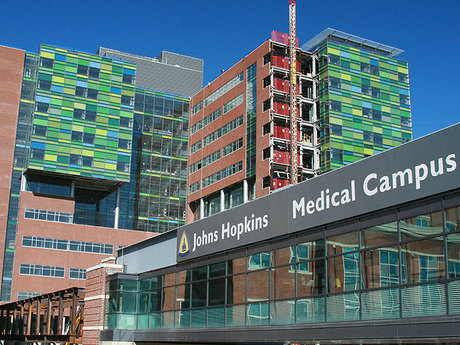
Then we commit to going to Burundi, to serve as clinical faculty for the medical school at Hope Africa University.  This means that we will be primary educators for Burundian doctors, including tropical topics.  This led us as a team to feel that some of us needed more formal tropical medicine training.  So, Alyssa (who wrote about her experience in Peru earlier this year) and I were delegated, and thus our family relocated again to Baltimore, MD, last week, for me to start the Summer Institute of Tropical Medicine at Johns Hopkins University.

It is a 4-week program, and I just took my first exam (the first one for me in almost 3 years, since my board certification) yesterday.  It is intensive, with 8 hours of lecture everyday.  There are 29 students from about a dozen countries, including three Kenyan ladies, so that is fun.  The lecturers thus far have been quite impressive, and I have loved the chance to learn from them.

Over two years in Kenya, we would encounter the same clinical questions again and again:  How do HIV meds need to change if treatment for TB is also required?  Are traditional herbs known to be a cause of liver damage or failure?  What is the best way to approach persistent diarrhea in an HIV patient?  We would toss these questions back and forth and search the literature, but overall usually continued in the dark.  It is truly one of the challenges of the medicine we do.  

However, now I have had the chance to pick the brains of world experts on these questions, and it's really an exciting experience.  This is not only gratifying, but will hopefully result in better care for the years of patients I am likely to encounter with these problems, as well as for all the patients that our future Burundian students and residents will treat, all across the country.