1.3.23

Teaching English


(By Erica Ause)

Outside of my role as teacher for the team’s children, I am also an English teacher for a few groups of people who work at the hospital. This role has been a huge blessing to me, and one of the things I look forward to most each week. It has helped me make some dear friendships and given me an opportunity to peek into the Burundian culture. One group I teach are the medical students. This is open for any and all students who want to give their Monday night to English. The class ranges from about 2 to 15 students depending on the other things they have going on like exams, being on-call, or classes. For some, this is a chance to practice English simply out of interest. For others, it is vital as they have chosen to write and defend their theses in English. This is not an easy feat, but for those would like to study in another country, a competence in English is just short of necessary. This is the most relaxed class I have because I never know who will show up! One day, we had only two students, both of whom I know well. So instead of studying English we played ping pong in the student center for an hour, speaking only English of course. Another time we had so many that we split into two groups and worked on two different skills based on level. This class is full of students around my age who show me their passion for those who live in rural Burundi. They love their patients and teach me about the differences between life in the city and life here in Kibuye. They have also taught me cultural things I would not learn otherwise, like how people date and how to throw a party.

Another class I teach is a group of hospital staff. These four men are learning English to either be accepted into a master’s programs abroad, find jobs dealing in international relations, or for the sake of their role at the hospital. This class gives me some insight into the generation that already has children, and who grew up and work in rural Burundi. This is a different outlook on the world, and one that I am blessed to be privy to. From them I have learned how one shows respect to different people (for example, the students are always the ones who erase the board, never the teacher), when it is appropriate to ask a question in class and when to stay silent.

The third group is the most structured, and time sensitive class. The four men I teach are a part of the PAACS (PanAfrican Academy of Christian Surgeons) residency program that has recently started here in Kibuye. PAACS is an English based program, so although these four speak Kirundi and French at the hospital, all their conferences and tests are in English. This class is half me teaching English, and half me learning more about surgery than I will ever need to know as we review from their 2-inch-thick textbook. We do practice tests, presentations, language lessons, and a lot of speaking. One day, before they headed to a PAACS conference in Kenya, I turned my house into a "restaurant" to allow them to practice the vocabulary needed for that setting. I asked them to provide some of the foods they often eat, but which I had never tried. The wife of one of the residents brought supplies to our kitchen and taught me how to make the dishes. We made Ugali which is like a ball of dough made from hot water and casava flour as well as Ndagala, a small fried fish cooked in oil and lemon. We then enjoyed the meal around the table, and it was delicious. It was a wonderful time spent together, using conversational and restaurant vocabulary, learning about each other’s cultures around food, hearing stories about their childhoods, and discussing some of their fears and excitement for their trip to Kenya.

One thing I know for sure is that the best way to learn language is through speaking about anything and everything. This means that “English class” can range from a lesson to a dinner together. I just love when language learning and friendship overlap. Spending time with all these students has been one of the most fulfilling parts of life here, and I am so grateful for the relationships I have made through it.

14.2.23

Neonatology!

(by Jenn Harling)

Hey Everyone!

I'll re-introduce myself as I still consider myself one of the "newer" team members... but in all acutality we've been here since January 2020!  I'm Jenn Harling, married to the ever-so-talented Michael Harling (surgeon / IT extrodinaire / internet guru / biomed guy / fixer of all the things our children break) and mom to Amelia, Madelyn, and Mark.  I'm a pediatrician but I like to call myself a self-trained budding neonatologist. I love all the children of Kibuye and really enjoy treating all of them, but there's something about those newborns that gets me!  While Alyssa is here, I focus mostly in Neo, but while she's gone I cover all of peds.  And I also love love love teaching... but that's for another blog.  Since our return from home assignment in July 2022, I've been working to improve the quality of care given in the Neo unit with small changes here and there. I attended a Neonatology conference in Tanzania in October 2022 and lerned so much and am excited to hopefully implement a lot of what I learned over the years to come.  

Our unit in the new Peds building (if you want more on that, you can see one of Alyssa's old posts about the opening of the peds building... actually there are TWO posts... here's the other one) is on the top floor and can hold about 40 babies.  One thing I think is really neat and possibly unique is taht the mothers get to have a bed on our unit as well.  You can see in the video that the "incubators" are attached to the end of a patient bed. The mothers stay in the bed and are the major caregivers to their babies. This is necessary as sometimes we have very high ratios of patients to nurses. 

Recent changes include a hand hygeine initiative, using a white board to track patients, keeping nurses in the unit rather than having them rotate to different services, and re-vamping some of our protocols.

Rather than ramble on and on, I thought I'd just give you a tour in person!  Hope you enjoy the petit tour. 


(Also, this is my first time uploading ... ahem... trying to upload a video so let me know if it doesn't work and I'll ask my husband for advice 😂)  


7.2.23

The 6 Ps

The 6 Ps of Acute Limb Ischemia Driving in Burundi

by Eunice John


For non-medical people (like myself), in medicine, there is something called the six Ps of acute limb ischemia, which occurs when there is a sudden lack of blood flow to a limb. Doctors often use this in the assessment of whether the limb can be saved with emergency surgery or not. 

The “Six Ps” include pain, pallor, poikilothermia (aka perishingly cold per the graphic below), pulselessness, paresthesia, and paralysis. 


Many years ago, even before our family’s arrival, a teammate(s) creatively came up with another “Six Ps” but for driving here in Burundi…and the story begins: 

Our family doesn't travel away from Kibuye too often. And I would say even our teammates who have to travel more (i.e. to the capital, a 2.5-3hr drive one-way), still only drive down maybe 2-3 times/month. While Burundi is indeed beautiful, driving here can definitely be stress-inducing, for both the driver and passenger(s) alike! 

Back in Dec 2019, there were 2 weddings on the same Saturday in Bujumbura, the largest city and former capital. Our family and some teammates were headed to one (for which our oldest was the ring bearer!). A couple other teammates were headed to the other. Before leaving Kibuye, I was asked to pray over the travels ahead. I prayed and we were on our way.

Maybe an hour into our drive down the mountain, we see some…traffic?? There is a line of vehicles backed up and definitely NOT moving. We slowly come to a stop. Why are they all stopped? What happened up there? Where is “up there”? How long has everyone been here? How long will we be here? Oh no…we’ve already driven over an hour…there’s no turning back. Are those people getting off that bus and walking??

While one of our teammates got off to do some scouting, the rest of us hung out in the car. Another teammate jokingly noted that I hadn’t prayed for all the six Ps! 

Well, fast forward to this past December, our family was driving back to Kibuye after some holiday travels, and I kid you not: during those 2.5-3 hours, we encountered all six Ps* (some more than once!). All that to say, these sorts of things tend to stick to my brain, so I wanted to share them with all of you. Now, in no particular order… 


We pray for protection from… 

1. Potholes


2. Pedestrians 


3. Presidential parades and the likes (this one was a sudden but short one)

4. Pikis (Swahili for motorcycle) 


5. Puke (we give each of our kids an empty "Blue Band bucket" aka margarine tub, to use as a barf-bucket; the sanitizing wipe from Ethiopian Airlines came in handy!) 


6. Pluie (French for rain) 
Note: In this picture, you can see pluie (look closely at the dashboard), pedestrians, and pikis! 


In all seriousness, we always pray for travel mercies and are thankful for every uneventful trip on the road. The next time you’re on the road or you think of our team and wonder how you can pray for us, you can just remember the 6Ps and our travels in general! 🙏


*The 6Ps were very slightly modified for this post. There is actually another P that is not listed here for mindfulness reasons. 

4.2.23

The start of a surgical residency at Kibuye


From the onset of the team that is represented by this blog, a deeply-felt calling has been not only to provide excellent healthcare for those who might not otherwise have access to it, but also to train others, namely African nationals, to do the same.  Over the past nearly 10 years here in Burundi, this has systematically progressed from teaching medical, anesthesia, ophthalmology, and nursing students, to teaching newly graduated doctors in our Stage Professionelle program. And now a new level of training has begun. 

In September 2022, after about 6 years of curriculum development, dozens of official and unofficial meetings with stakeholders, ministers, and medical educators, and lots of prayer, we officially launched a 5-year Surgical Residency Program here at Kibuye Hope Hospital.  The program is unique in that it is a joint effort between 2 partners:  Hope Africa University and PAACS.  Hope Africa University provides academic support and in-country recognition/legitimacy in the form of a Masters Degree in General Surgery.  PAACS (The Pan-African Academy of Christian Surgeons) provides international recognition, curriculum and conference support, as well as financial underwriting of the program.

In a country which is among the most surgeon-deficient in the world, the training of local doctors, in their own country, in a hospital with a high surgical patient load, is sorely needed.  Two residents started the program in September 2022, and two more joined them just this month.  We hope to enroll 2 new residents each year.  

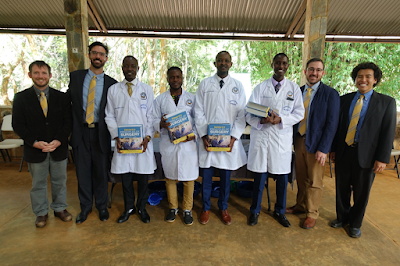
Last weekend, a special ceremony took place in which the 4 residents were presented with white coats as well as their 2-volume surgical text which will serve as the core of their reading material over the next 5 years.  Families, friends and colleagues gathered to celebrate the commencement of this program, also reflecting upon the great responsibility the residents have undertaken.

Our hope is not only to develop excellent surgeons who will provide decades of competent and compassionate care for patients here in Burundi, but we also pray that their care for patients would be deeply molded by their faith in Jesus.  May they be kingdom-builders in exercising the gifts and opportunities that God has given them.

Our hearts are full of gratitude for all those who have supported the conception of this program through giving advice, prayers, encouragement, and technical and financial support – and for all who continue to make this program possible.


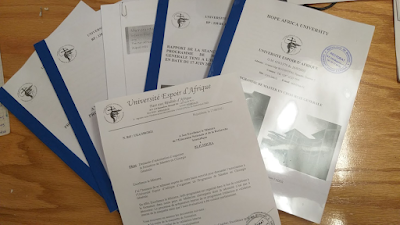
Part of the 250 page dossier submitted to the Ministry of Education

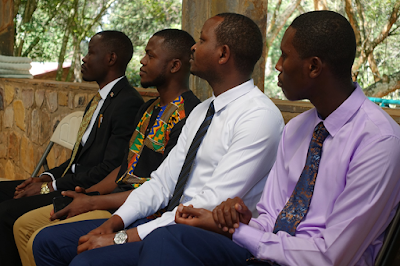
The 4 new surgery residents

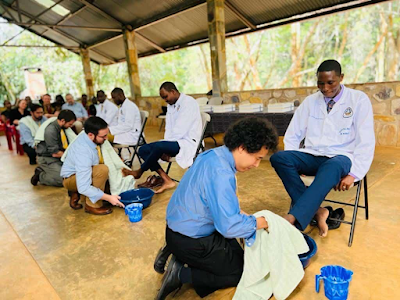
A foot washing ceremony attempting to model the type of surgeons we want them to become

The 4 surgical residents and 4 surgeons


31.1.23

A (surprise) Noble Visit to the Drum Sanctuary of Gishora


By Julie Banks

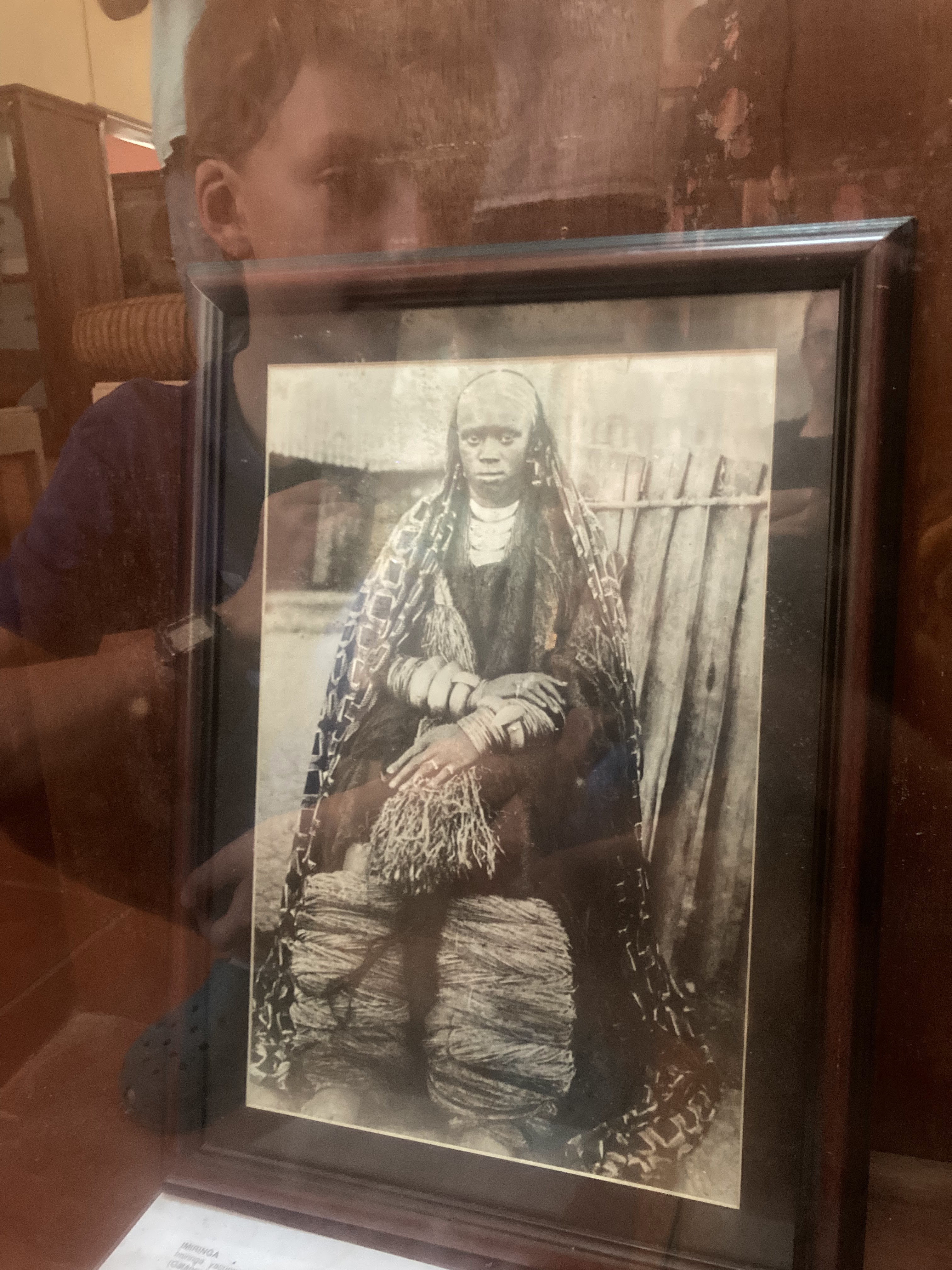
We recently took a couple visitors to the Burundi National Museum in Gitega. We had been there once before, and were fascinated by the collection of artifacts and photos from Burundi when it was a kingdom. 


Both times we have visited this museum, we’ve been given a personal tour by friendly and knowledgeable museum employees. As this most recent host was showing us one of the first photographs of the Royal Drummers of Burundi, he pointed out his ancestor in the photo. (It was difficult to translate exactly how many “great-greats” there were.) Then he shared that he, too, was a Royal Drummer many years ago.

A Burundian warrior - each piece baring significance

He told us about the Drum Sanctuary of Gishora nearby. We had heard of this Drum Sanctuary, but had ever been. While it is one of the most notable sites in Burundi, we just somehow never made it happen to go. I think we all can identify with this – you never do the touristy things in your own city or state unless you have a visitor, or are on a field trip for school!

But somehow today seemed like the day to do it. 

A few of our other teammates were already on their way to Gitega, where we were, so we sent them a quick text: : “Hey we met a guy who said he could arrange for us to go see the Drum Sanctuary. Do you want to come?” 

And that was pretty much all the information we had! We hung out at a local shop on the town square, and waited for our friends to arrive. The shop owner’s wife gave us some treats she had made while we waited. Our teammates arrived and now we had 2 cars full of Americans eager to see this famous site. 


Smelling the Royal incense

We swung back by the Museum to pick up our new guide. He found a seat in our van and off we went. He was sitting in the very back of the van and I was up front in the passenger’s seat. So translating was a bit inconvenient, but at least the whole van was able to hear what he was sharing. 

He began naming off American states and cities, and we quickly remarked that his US geography knowledge seemed way above average. Then he told us he has been to the United States. Now this one I had to confirm a couple times to make sure I understood his French, because it is quite rare to find Burundians who have traveled to the United States. He told us he was in fact on a world tour with the Royal Burundian Drummers. Again, I’m surprised. I’m finding out that when he said he had been a Burundian drummer, he was serious! (His stories were fascinating, but too much for this one blog post!)

We learned, first hand, what we had read or heard about becoming a Royal Drummer. It’s akin to nobility. One’s bloodline chooses for them if they will be one of the drummers. As I understand it, true Burundian drummers will be from the Gishora region, and it is passed down from father to son. Some of us have seen Burundian drummers perform at various events such as HAU graduation, but this was different. We were about to see the birthplace of the famous drummers.

Historically the drummers were not just performers. They were like the King’s noblemen and the knights. They were also warriors. In fact, one of his grandfathers, (again I don’t know how many “greats”) helped hide the King of Burundi from the Germans who were searching for the King in the late 1800s. They hid him in a granary and he was not found! He was very proud of his heritage.

Zeke looking at the King's wife adorned from head to toe.

So after a car ride full of interesting stories, we arrived at the Sanctuary. The Burundian drum is very sacred in this country. The drums represent fertility and regeneration, two important concepts in a largely agricultural society. The drum itself is made from a hallowed out tree trunk of a tree that can only be found in Burundi, and the drum head is made from cows who are bred specifically to become a drum.

The first thing we were shown was the oldest drum in Burundi. It is housed in its own hut, and the drum is the only thing that is in this hut. The door of the hut is low on purpose so that it forces anyone who would enter to bow down and show respect. 

Modeling how one must respectfully enter the King's presence


Gishora also has a replica of the King’s palace (a larger hut) and its entrance is also low to the ground forcing respect from all who would enter. We were given a tour of the inside of this replica palace and our visitors were even able to sit on the King’s stool and lay on the King’s bed. It was all so fascinating. Our guide was bursting with pride.

Intern Joshua sitting on the King's stool with his spear and guillotine. 

The tour ended with a performance from the drummers. This was last minute, so I think they gathered whomever they could from the team and gave us the best show they could! The drummers enter with the drums on their head. They are led by one who carries a shield and a spear and leads the singing. 


They land in a crescent shape with one large drum placed in the middle. There are three simultaneous rhythms being made with different size drums that produce the famous sound of these drums. As they drum, they take turns taking the middle of the crescent to perform physical feats like jumping and dancing. All the while smiling. 

Notice the cute village boy behind the drummers with his own set of sticks!

The drummers also tell stories with their singing and dancing about war, animals, crops, and their leader. The rhythm is powerful and these men will make you love Burundi by the time they finish! Before they finished however, they invited a few of us to join their dancing. We had such a great time.

One of the local ladies heard that there were some doctors from Kibuye in the village so she gathered all her medical records and brought them to our team. So, after the performance a few of the doctors gave an impromptu consultation! 


Logan and 2 visiting physicians seeing how they could help this Gishora woman

It was an adventurous day and it made us appreciate, respect, and love Burundi even more. 


22.1.23

MK Teacher Day in the Life!

By Glory Guy I have had the immense privilege of being one of the middle school MK teachers in Kibuye for the last year and a half, and I couldn’t be gladder that I took the phone call in March 2020 where a dear friend asked me, “Would you consider teaching in Burundi?” This job has been such a joy, and will continue to influence my life as both a teacher and a human even after I leave Burundi.
Kibuye is in desperate need of another teacher for the 2023-2024 school year, so as we pray and hope for another teacher, here is a picture of a day in the life of an MK teacher! 7:50 am – One of the teachers rings the school bell, and for the next ten minutes there is a flurry of laughter and changing from outside shoes to inside shoes as students head to their first class of the day. I open the curtains, turn on some music for the morning and set up the bellringer for my first class at 8 am, which is 8th grade Reading and Writing.
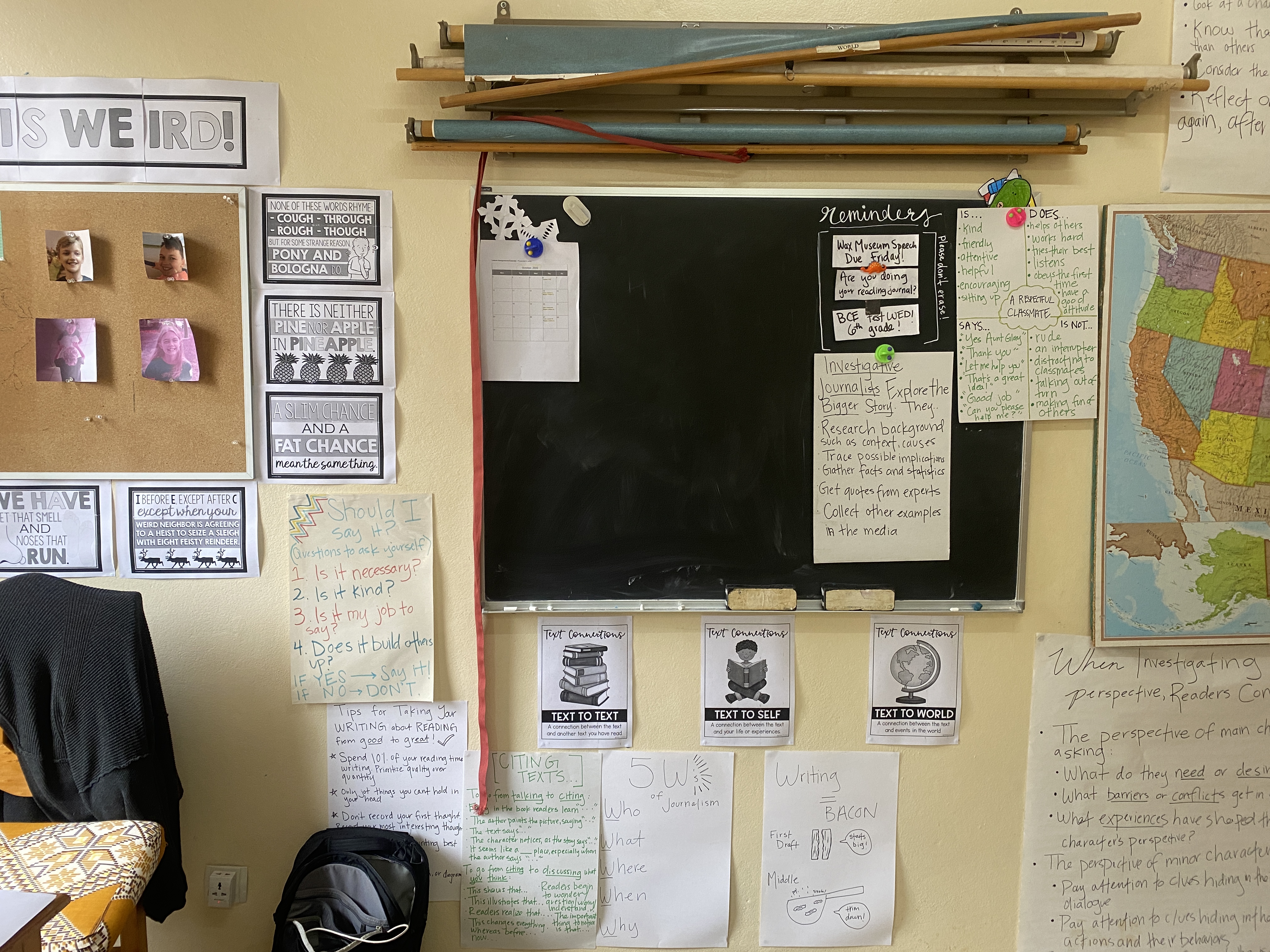
8:00 am – My two eighth graders and I have spent the past year and a half in class together for most of every day, so I have the privilege of knowing them very well. They are my students, but I wear many hats with them, teacher, big sister, aunt, babysitter, the one who comes over for movie night, etc. This is one of the sweetest things about life in Kibuye that is different from life as a teacher in the States, I get to walk with my students for multiple years and watch them grow, academically, spiritually, emotionally, etc. I teach them for three blocks every day, Reading and Writing, Language Arts, and History. As eighth grade is the last year at KHA, we are currently preparing for major transition as they head off to a new school next year.
8:50 – My students transition to Bible class, and I head home for a quick 20-minute coffee break, before I teach my next class at 9:10.
9:10 – My second class of the day begins, 4th and 6th grade Reading and Writing. We do not currently have any 5th graders at KHA, so 4th and 6th grade are combined for this course. This class is slightly differentiated due to difference in grade level, so we do our Reading work together and I alternate in teaching 6th and 4th grade Writing depending on the day. When I work with 4th grade, 6th grade works independently and vice versa.
10:00 am – Students flood out the front door for a quick 20-minute recess. They run home for a snack, jump off the swings on the playground, ride on the zipline (so cool, right?), or hang out on the school’s front porch. My two roommates and I walk the approximately 30 step commute between our home and the school, and greet our house helper who is washing the dishes or baking in our kitchen. We debrief telling funny stories about our mornings, while we make more coffee or tea, grab a quick snack, hang laundry, pull various things (such as cheese, cooked vegetables, quiche, ground beef, etc) out of the freezer to defrost for whoever is in charge of dinner for that evening.
10:20 am – Recess ends, and my third class of the day begins. This class is middle school Language Arts with 6th and 8th grade students, who are two sets of siblings! We begin with my students’ favorite part of the da,y when they are given 20 minutes to read to themselves! We put on classical music and our twinkle lights, and students have the option to read on the carpet, at or on their desk, on our little back porch, or even in a tree. At 10:40 we reconvene for class, and 6th grade and 8th grade divide based on grade level for their grammar or spelling lessons for the day. Depending on the day, I work with one grade level while the other grade works independently.
11:30 am – This is my planning period, which also doubles as a time when I supervise 4th grade Language Arts. From 11:30-12:10 I plan classes for the following week and catch up on grading, and if fourth grade has any questions I work with him to answer those.
12:10 pm – This is one of my favorite parts of my day, when the middle schoolers begin their chores! This includes sweeping, wiping the blackboard, taking out the trash, and cleaning the chalk board erasers in the school before they head home for lunch. During this five-minute period, I put on a favorite Disney song of the day and we dance and sing along as chores take place!
12:15 – 1:15 pm – Lunch time! On Tuesdays and Thursdays, I head to a family’s house for lunch. This is one of my favorite time blocks in my week. I get to spend time with a family that I love, and put on my “auntie” hat rather than my teacher hat. I get a chance to chat with friends and teammates and play with sweet kiddos who I don’t have in the classroom! On Wednesdays, our only middle school girl comes over to our house for lunch. She is the only girl above age eight on the compound, so we take Wednesday lunches to get some gal time with her.
1:15 – 1:50 pm – This is my second to last block of the day, which is 4th and 6th grade History. This year we are taking on the Middle Ages, studying knights, castles, and epic battles, needless to say my three boys in this class are thrilled.
1:50 – 2:30 pm – I send my 4th-6th graders off to their next block, and 8th grade comes in for the last class of the day, which is American Government. Though we live in Burundi, most of our missionary kids end up at other schools across the world for high school, whether that be at a popular boarding school in Kenya, where many of our Kibuye kids go, or a school in the States. This also doubles as our “read aloud” time, where my students draw, craft, or most recently finger knit, while I read aloud a class novel for about 10 minutes. We most recently finished S.E. Hinton’s The Outsiders, which they adored. One of my favorite parts of my day is getting to read aloud and discuss books with my students. They are thoughtful, inquisitive, asks lively questions, and are always so excited for this time.
2:30 – 3:00 pm – Though students head to one of their specials, be it Music, P.E, or Art, I finish tidying up my classroom and make any last-minute preparations for the following day before I pack up and head home for the afternoon!
3:00 – 6:00 pm – This part of my day looks a little bit different depending on the day of the week! Sometimes, especially on stormy days, I let the rain lull me to sleep for a quick nap after school. Other days I do laundry, go on a run, curl up on the couch with a book, puzzle, got to various team meetings, or hang out in the hammock with kiddos in our backyard after school. Wednesdays are my day for dinner, so I usually begin prepping for dinner between 4:00 and 4:30 for 6:00 or 6:30 dinner with my roommates. Usually, this is interrupted in the most delightful ways by children tapping on our screen door to say hello, to drop off a can of corn or mushrooms from their mother, or a flower they picked in the yard, while other days they request to play or just want a hug.
6:00-7:00 pm – dinner with roommates or teammates depending on the evening!
7:00 – 10:00 pm – During this time I respond to emails, talk to people on the phone who live in the States or on other continents with different time zones, and wind down for the evening. I fall asleep to the sound of rain or of crickets, and another Kibuye day comes to an end!
Thanks for following along on this glimpse into the life of a Kibuye MK teacher! It is an honor to be a part of this team that has dedicated their lives to the work of the Lord in Burundi!

12.1.23

Doesn't Mean You're Doing It Wrong


 Where no oxen are, the manger is clean.

But much increase comes from the strength of an ox.

-Proverbs 14:4

I read this proverb this morning.  It does what proverbs do best, namely to pithily state something that is universally accepted, and then leave you to connect the dots.

Generally, I'm a fan of order.  Unapologetically, in fact.  There is something about bringing order out of chaos that rings of creation by the God in whose image the Bible says I am made.  In the hospital, and outside the hospital, I spend a lot of time trying to solve problems.  And oftentimes, those solutions take the form of trying to develop a good system.  A system that documents medicine doses given.  A system for determining how our construction projects will be funded.  A system for approving student thesis research projects.  These are all good things, and what's more, I think they are one of the significant contributions that I and my teammates make to various situations we encounter here.  I see a well-functioning system in place and it feels so right.

In other words, I like a clean manger.  Quite a lot.

Generally speaking, though, we do not live in a world of clean mangers.  And by the way, this proverb is being ridiculously polite, and I think we all know it.  I mean, yes, it's true that the oxen will leave the manger dirty, and there is a nice parallelism between the manger void of food and the harvest of food that the oxen produce.  But we all know that the manger is not where the real mess is.  Oxen leave quite a bit more in the stables before they go out to their work.  The stable is not clean.

I can relate to that.  For all fires I try and put out, or all the systems I try to put into place to prevent the next fire, things fall apart.  The day feels like whack-a-mole.  Even 60% feels super great sometimes.  This world is good and fallen and messy.  Our efforts at creative order in this world are good and fallen and... messy.  Actually it can be quite dispiriting.

I like a clean manger.

Proverbs' personification of Wisdom walks in the door and retorts, "but do you like an abundant harvest?"   I see where she is going with this.  I glance up at her as if to ask "do I really need to answer that?"  She looks back as if to say the same thing.  

"Yes, I do," I say begrudgingly, but still appreciating the back-and-forth. 

"Then it's going to be messy," Wisdom replies, "but that doesn't mean you're doing it wrong."

***

Aside from the oxen argument from the natural order, why is this mess necessary?  Couldn't we be free to create order without it.  Last year, I read these words from the late, great Eugene Peterson in his Under the Unpredictable Plant:

A group of seminarians I was leading on retreat once asked me what I like best about being a pastor.  I answered, "The mess."  I had never said that before; I don't think I had even thought it before.  The answer surprised me as much as it did them...Actually I don't like the mess at all.  I hate the mess.  I hate the uncertainty.  I hate not knowing how long this is going to last, hate the unanswered questions, the limbo of confused and indecisive lives, the tangle of motives and emotions.  What I love is the creativity.  And what I know is that I can never be involved in creativity except by entering the mess.

I think this is quite true, and I can relate to it.  Thus, to act in imitation of my Creator, I will enter the mess.

Even more so, I think that I am (very slowly) learning that this is how we grow in trust.  How should things be in this world?  It's a good question, and part of the answer is that we are to be trusting God.  And how would we learn to trust without things happening in a way that is other than what makes sense to us?  

The manger is not clean.  We need the mess.

***

One Kibuye way of expressing this over the years has been to reference "thorns and thistles".  In Keller's Every Good Endeavor, he references these words in Genesis 3:  "Cursed is the ground because of you; through painful toil you will eat food from it all the days of your life.  It will produce thorns and thistles for you, and you will eat the plants of the field."  

Keller's point is that sometimes our work in this world is full of hardships and brokenness, the "thorns and thistles".  Why?  Because the world is broken with sin.  Why is that important?  Because, though it means that the presence of such difficulties is a sign of something wrong (we know this intuitively), it does not mean that we are doing something wrong.

Yes, we have days like that.  So you do, I imagine.  We walk home and catch the eye of an old friend who happens to also be a teammate.

"How's the day?"

"Thorns and thistles."

A nod of understanding.  Sometimes, it's a mess.  But that's not a sign necessarily that you're doing something wrong.  It may be an opportunity for creativity.  An opportunity for trust.  Maybe it means that the oxen are hard at work.  We await the harvest.  Courage as you wait.

6.1.23

State of the Hospital Address

by Carlan

This is an extract from the message I shared with our teammates at the start of the year. It has been edited slightly for this audience. I hope it will encourage you too.


L’essentiel est invisible aux yeux; ce n’est qu’avec le cœur qu’on voit. -Antoine St-Exupéry
(The essential is invisible to our eyes; it is only with the heart that one [truly] sees.)


God gave Kibuye Hope Hospital many good gifts in 2022. Not least among these is the presence of two Samaritan’s Purse post-resident doctors, Drs Ben Roose & Selina Thomas. We struggled in other areas of staffing last year, particularly without a DAAF, but specialist physician coverage was on solid footing. With four surgeons (plus some short- / medium-term help) and three family doctors, residency training moves forward. PAACS officially started their second class this month and FM is getting ready to submit their dossier for internal and external reviews. We also hosted five visiting residents/fellows in FM, ophthalmology, and emergency medicine, a record number for Kibuye.

When wells and fuel ran dry in the middle of the year, God brought us some amazing encouragement via outside support. MSF (Doctors Without Borders) took over paying for severe malaria cases. We performed 61 cleft lips / palate repairs (with the support of SmileTrain), put in about 300 intramedullary nails (a way to surgically fix a broken leg bone) from SIGN — making us #10 in the world, and enrolled over 30 kids in the only retinoblastoma program in the region (sponsored by SEE International). AMH (African Mission Healthcare) continues to support this work and help us fundraise for big projects like the massive Peds Building (which hit max capacity in its first year in usage, BTW). And of course our mission, Serge, continues to shower us with financial, logistical, and spiritual support. Our hospital was able to score maximum points in our quality of clinical care evaluations that happen every quarter. Things are getting better. There is much room to grow, but progress abounded in 2022.

For the year upcoming, I hope to see the hospital take greater strides towards community and organizational sustainability. Caleb is building our capacity to be totally grid-independent for water and power. Michael is setting the stage for an information technology revolution at Kibuye with distributed digital X-rays and improved charting / tracking software applications. With the new leadership structure of IMeLEA in place, we are hoping to move Kibuye Hope Hospital towards greater financial independence, with a large part of that being an upgrade to National Referral Hospital status. I’m personally committed to getting some additional quality measures in place and executed effectively.


Some of these are bold goals, audacious even in the face of years of struggle and difficulty to chart a new course, but I believe that God has given us the right team at the right time to accomplish these and many other good works in the year ahead. But I want to leave you with one number and one story that I think illustrate the best work we have to do here, that doesn’t require anything other than showing up for our patients, students, and colleagues every day.

1523

That’s the number of patients whom God saved at the hospital in the last twelve months…at least that the chaplains know about. With the median US church attendance being 65 according to a 2021 study by Lifeway, that is like planting >23 churches in a year!

And maybe not all of those are new conversions or good soil that will bear fruit 30-, 60-, and 100-fold, but many are like Divine* (not her real name), a 32 year old woman whose husband left her when she delivered their 3rd stillborn baby. She was destitute and paralyzed by despair. Where could she go? What would she do? Yet into her dark cell of depression and abandonment shone a ray of hope from one of our chaplains. Could he pray with her? OK, I guess so.


He shared with her about true Hope. She repented of her sins and confessed Jesus Christ as Savior and Lord that day.  That painful, horrible day had brought new life to Divine’s soul and she was released from the fear of the hex placed on her by a neighbor, freed from the shame of being unable to bear children and now being a functional widow, filled with a love everlasting that wasn’t at all based on who she was or what she had done but on who Christ is and what He did.

Let us press on into 2023 and pray that our Master and Friend will continue using us as He reaches into the brokenness of our world to bring forth beauty and grace!


15.12.22

End of the Year Donation Opportunities

Kibuye Hope Hospital has continued to grow in 2022, as in years past.  One former student returned to visit last year and told Eric that Kibuye is where "buildings sprout like mushrooms."  Well, it's true!  While we are trying to focus more on staff development and personnel growth these past few years, there are always needs for more buildings, or renovations of current spaces, in order to accommodate increased patients and services.  We have been blessed by the generosity of so many individuals, churches, and organizations over the past 10 years.  If you're interested in making an end of the year donation to Kibuye, here are some ideas for you:


1.  Resident Housing
With the start of the PAACS surgical program, a continued internship program for 12 doctors, and an upcoming family residency program in the next few years, we are rapidly running out of housing.  When all of our residency programs are up and running, we'll need space for over 20 more doctors and their families.  A team from EMI came and drew up some plans for a housing unit of 5 studio apartments and 2 family housing units just inside the main gate to our housing area.  We'll need just over $100,000 to finish the units.  Click here to donate (resident housing in the memo line).  


2.  District Health Office
While this building is technically outside the hospital, the district health office, or BDS (en francais), is an important part of our life and work.  Kibuye is a health district made up of 17 different health centers, all of whom are staffed by a number of nurses (and the occasional doctor) who provide care for thousands of Burundians at a lower cost/lower acuity than the hospital.  Lots of essential work like prenatal care, malaria treatment, vaccines, etc are done at these health centers.  The district health office houses staff to oversee this variety of care and work being provided, and they need more space just outside the hospital walls, which will enable them to expand their care and also give the hospital more in-wall space to grow.  We need about $150,000 for this project.   Click here to donate (BDS or health office in the memo line)

3.  Nutrition Program
SO many of you have given to this fund in the past.  On any given week at Kibuye, between 300-500 mothers with malnourished children come every Monday and Thursday to receive a meal, some health maintenance, and a kg of busoma (a nutritional porridge) and a hard boiled egg to take home.  The rains have come late this year to Burundi, causing increased food shortages and increased rates of malnutrition, so we've seen numbers rapidly increasing even over the last month.  This fund also pays for meals for inpatients at the hospital, porridge and beans and rice, so that patients have the nutrition and strength to be able to heal.  Altogether this fund needs over $150,000 per year to continue on, but the amazing thing is that it costs less than $1/day to feed one patient and their caregiver.  Click here to donate.

And finally, if you're interested in contributing to some of our new teammates, the link to that blog is here.  Merry Christmas to all of you, and thanks for the many ways in which you continue to partner with us.  

8.12.22

New Team video!

 A few months ago, we shared with you a video created to celebrate the new pediatrics building here at Kibuye Hope Hospital.  The video was put together by friends of ours at SEAM (Serge East Africa Media).  While they were here, the guys also took extra footage to be able to create a new team video for Serge Kibuye.  Our old one, while fantastic, is now about 7 years old and is starting to look a bit outdated. So, we are happy to announce the release of said video, finished just in time for the holidays.  Enjoy.  And we are grateful that so many of you have been a part of our work at Kibuye this past decade.  You are truly partners and friends on the journey.


Kibuye Hope Hospital.mp4 from Serge East Africa Media on Vimeo.

Or click here to watch the video on Vimeo.