26.10.22
Already and Not Yet
One of the hardest parts about living in Burundi is learning to hold the hardness of life together with the beauty, joy, and love that is found here. 1 John 3:2 says, "Dear friends, we are already God’s children, but he has not yet shown us what we will be like when Christ appears. But we do know that we will be like him, for we will see him as he really is." Basically, while Christ did come and bring us Heaven after death, we are still waiting for when he comes again and brings the new heaven and new earth that will be without pain and suffering. It is the already, and the not yet and is our reality, whether we see it or not. But in this part of the world, it is unavoidable.
This past year I taught writing to an American boy who lives in Congo, and he expresses it well in a poem he wrote about his country:
Congo
Violent, Peaceful
Fleeing, Praying, Helping
Sad and beautiful country
DRC
This poem shows the understanding of a child that the world is not good nor bad. It is both at the same time. There is fleeing, praying and helping that exist together. There is sadness and beauty alongside each other. There is violence and peace in the same places. This 10-year-old boy encourages me to follow him in his acceptance that this is how the world is and to see both as equal realities.
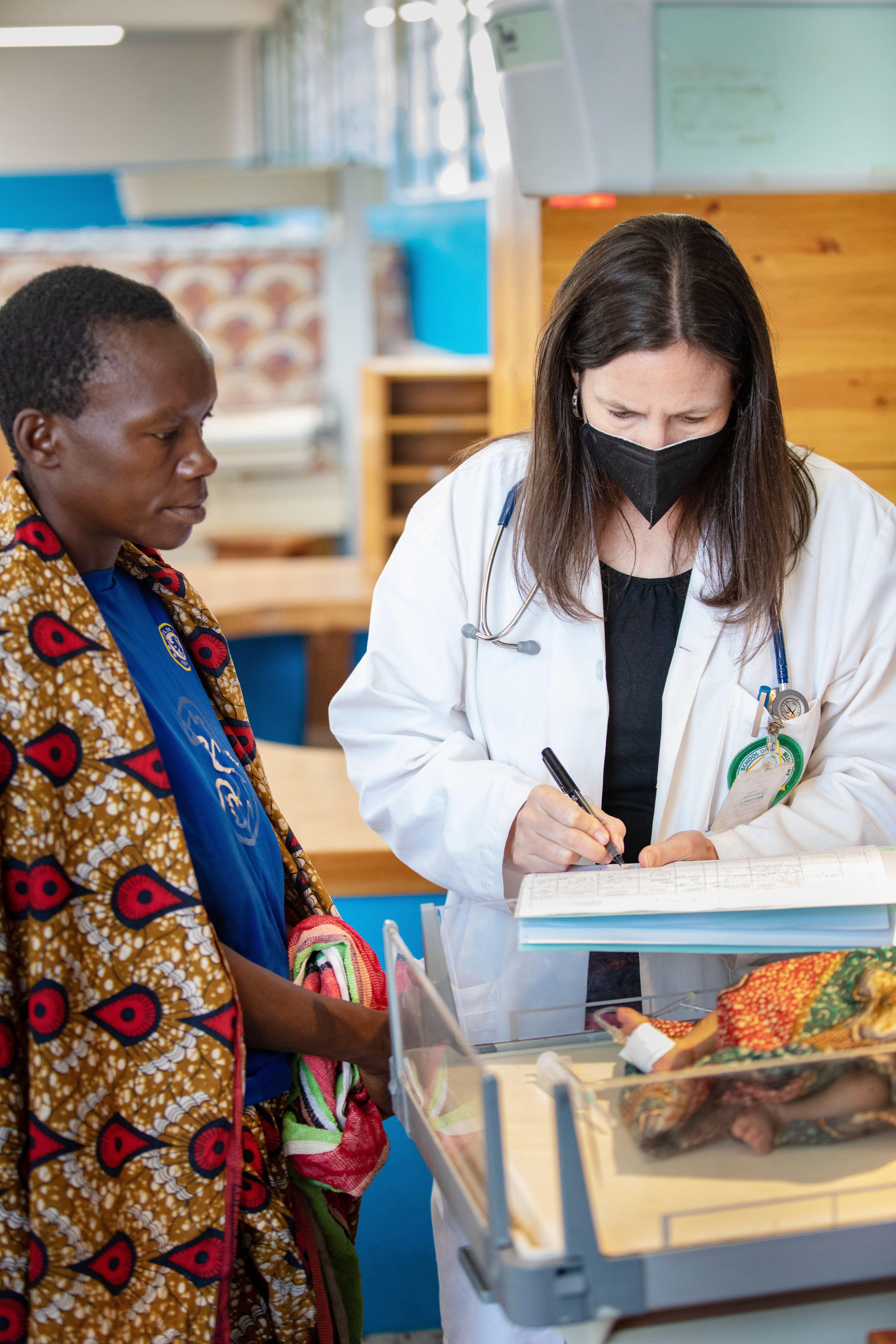
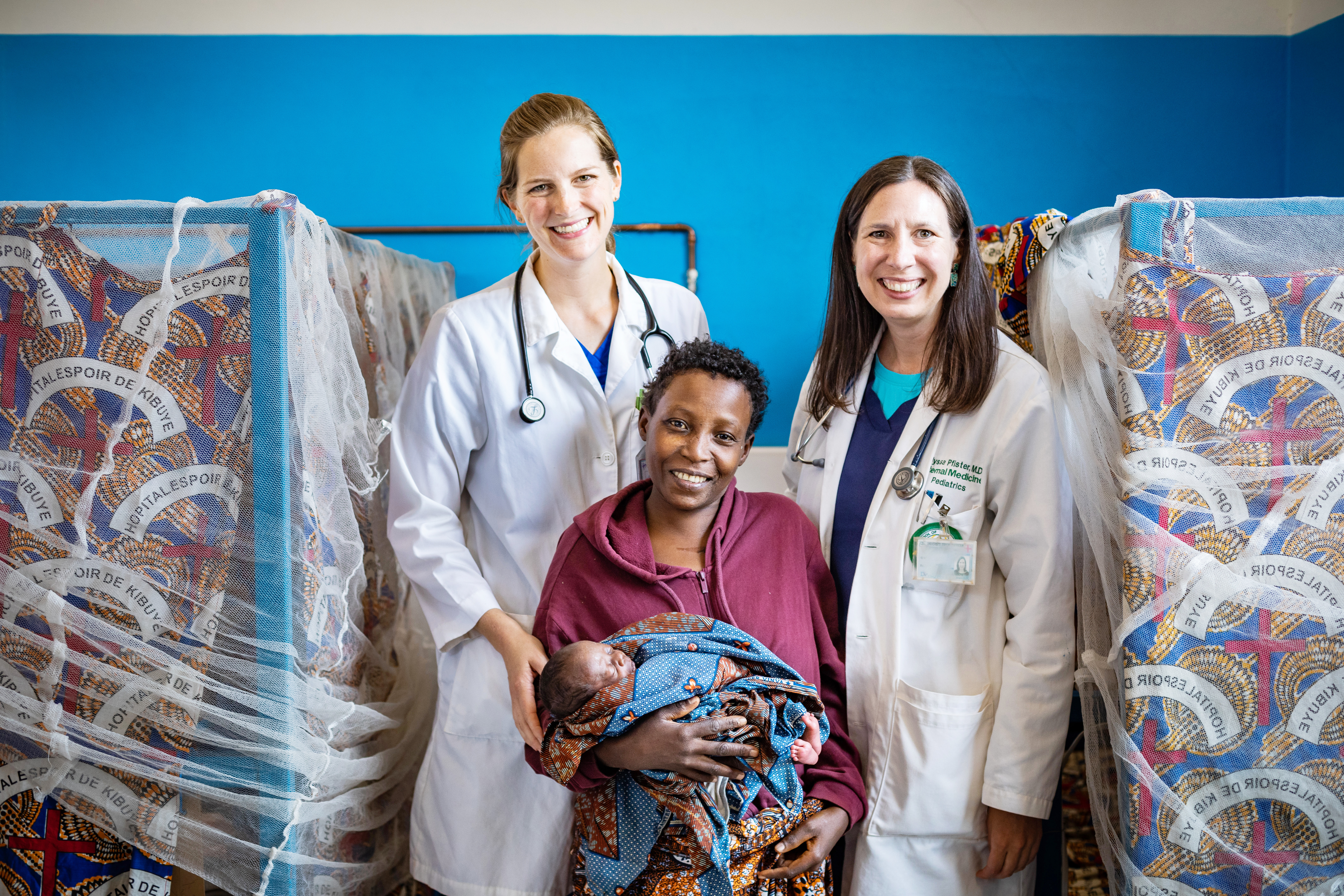
A place that our team experiences this dichotomy most acutely is in the Hospital. I want to spend a little time sharing a little of what happens at the hospital where our team serves.
Some Background:
When the team arrived in Kibuye in 2013, there was already an eighty-bed hospital with about ten houses for staff. Now, the hospital has around 350 beds and there are about thirty houses for doctors This is a large change and has created more chances for doctors to be trained, to be given jobs, and for care of patients in and around Burundi. The hospital is connected to a university in Bujumbura, the largest city in Burundi. Therefore, many medical students come to Kibuye to do their internships needed for school. The services include OB GYN, pediatrics, urgent Care, Family medicine, ophthalmology, and surgery, along with food distribution, and courses for medical students taught by the doctors, discipleship and prayer. So far Kibuye has graduated around 310 African doctors since 2014. It is quite a large operation happening!
Below are some pictures of graduation celebrations, our team (+some visitors) moments of teaching and surgery. Everyone hard at work!
I asked several doctors here what the hardest and best parts are about the hospital. Overall, their responses reflected the simultaneous hope and suffering that I have come to understand over my year and a half here. One med student said that the best part is “when I get to see a patient happy because she was able to help them. But the hardest part is to see patients get worse and worse and to be unable to help them.” This is the already and not yet. Yes, there are some amazing things happening here, and people are healed who would never have had a chance without this hospital. And there are still people that die because the world is what it is.
One doctor told me that the best part is "watching a lady hold her first baby after multiple losses" and getting to be a part of that moment. The greatest challenge is seeing a patient whose illness you recognize, whose treatment you know, but also knowing the treatment isn't available in this country, and is too expensive. Yes, there is hope, but often it feels like there isn't enough.
I think the most notable line in the poem Congo is "Fleeing, Praying, Helping". Sometimes, the problems weigh so heavy that I do feel like fleeing, but really the answer is to pray. To pray that God would help us feel the sadness, see the beauty amidst it and move forward to help. This is an exhausting state to live in, but I wouldn't change it, because it reminds me how much I need to depend on God to help me live in the world we have been given.
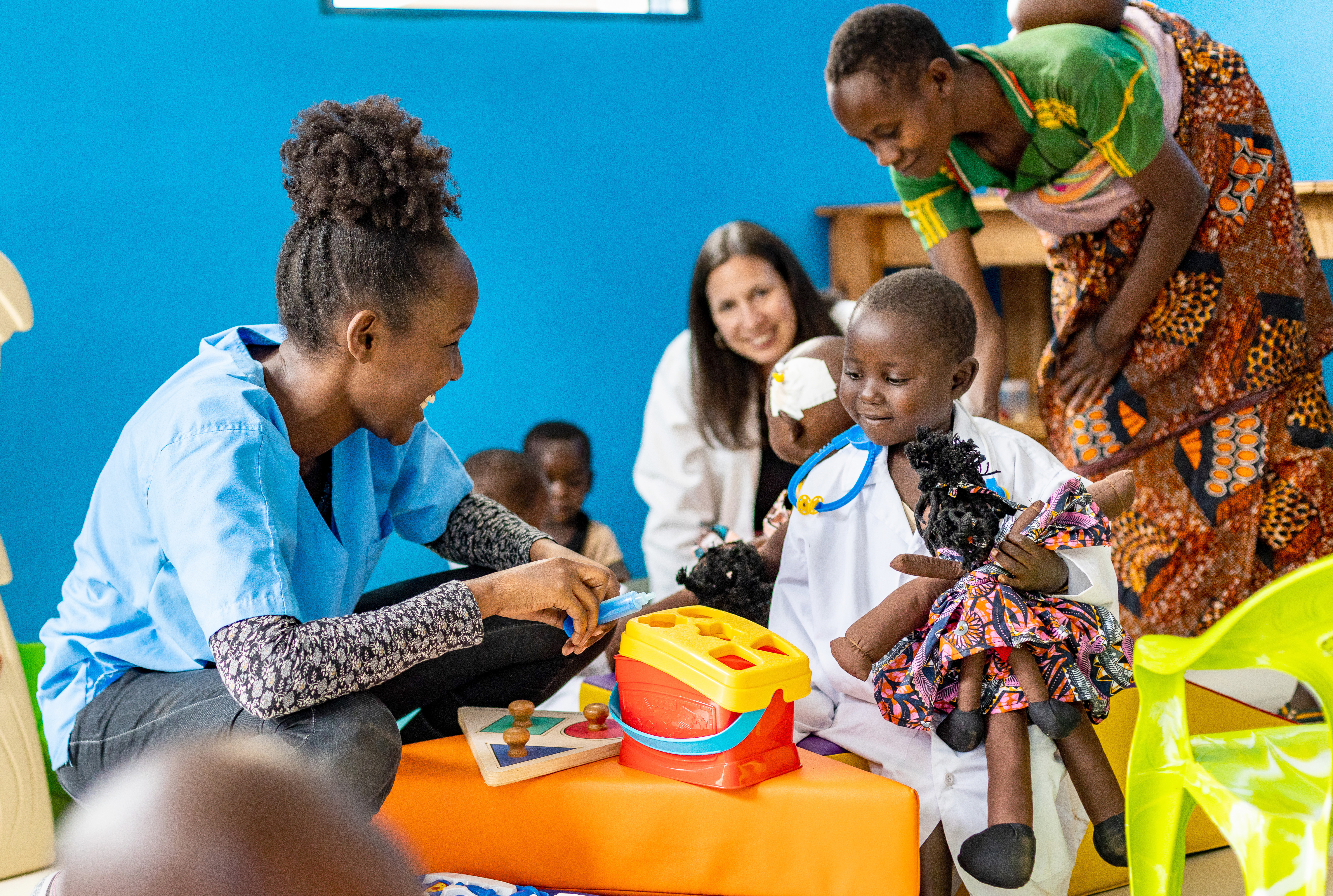
I will leave you with an illustration. My roommate Jenny was an occupational therapist before she was a teacher. She has used this skill to love and work with the children in the hospital who needed help in that area. One child she worked with was an 8 year old girl who came in for malnutrition. When she arrived she could hardly sit up on her own, was very weak, and seemed to have some sort of mental and physical delay. Many people said that her situation was too hard and unknown, and that there was no way to help her. But God kept putting her on Jenny's heart, and every day she went to pick up this little girl, play with her, stretch and use her muscles, and try to make her laugh. Over the next few weeks, she started to walk on her own, to recognize Jenny, ask when she was coming, and get herself out of bed when she saw her walk into the room. She began to play, smile, and enjoy herself; all things no one ever thought she would be capable of. Jenny said a hard goodbye to this girl she had grown to love as she was releases from the hospital having made some improvements. Months later, this little girl came walking and smiling back into the hospital, all chubby and strutting like she owned the place. How good is our God!!
Telling you this story could go many ways, but what I want to highlight is how this miraculous story is an example of sadness and beauty, of already and not yet. It is representative of the healing that happened on this earth when Jesus brought the kingdom down. And yet, we are still not in the home we were made for. Just as this girl's healing happened in a hospital, which was not her home. We can only continue to pray that little Joy will grow knowing the Lord and eventually find her eternal home with our Lord and Savior.
Joy at the beginning of her stay doing some exercises with Jenny:
Joy when she came to visit a couple months later:
This picture has nothing to do with the hospital, I just love it a lot. These girls were SO EXCITED to have their pictures taken, they just couldn't control their giggles!
(It's also the only picture on this blog that I took, the others were taken by a number of different people in our community).
Please just pray for this place. For the people who live and work here, and for those who come to stay at the hospital! Thank you all for your ongoing support and care. Love to you all.
Press CTL+P to Print
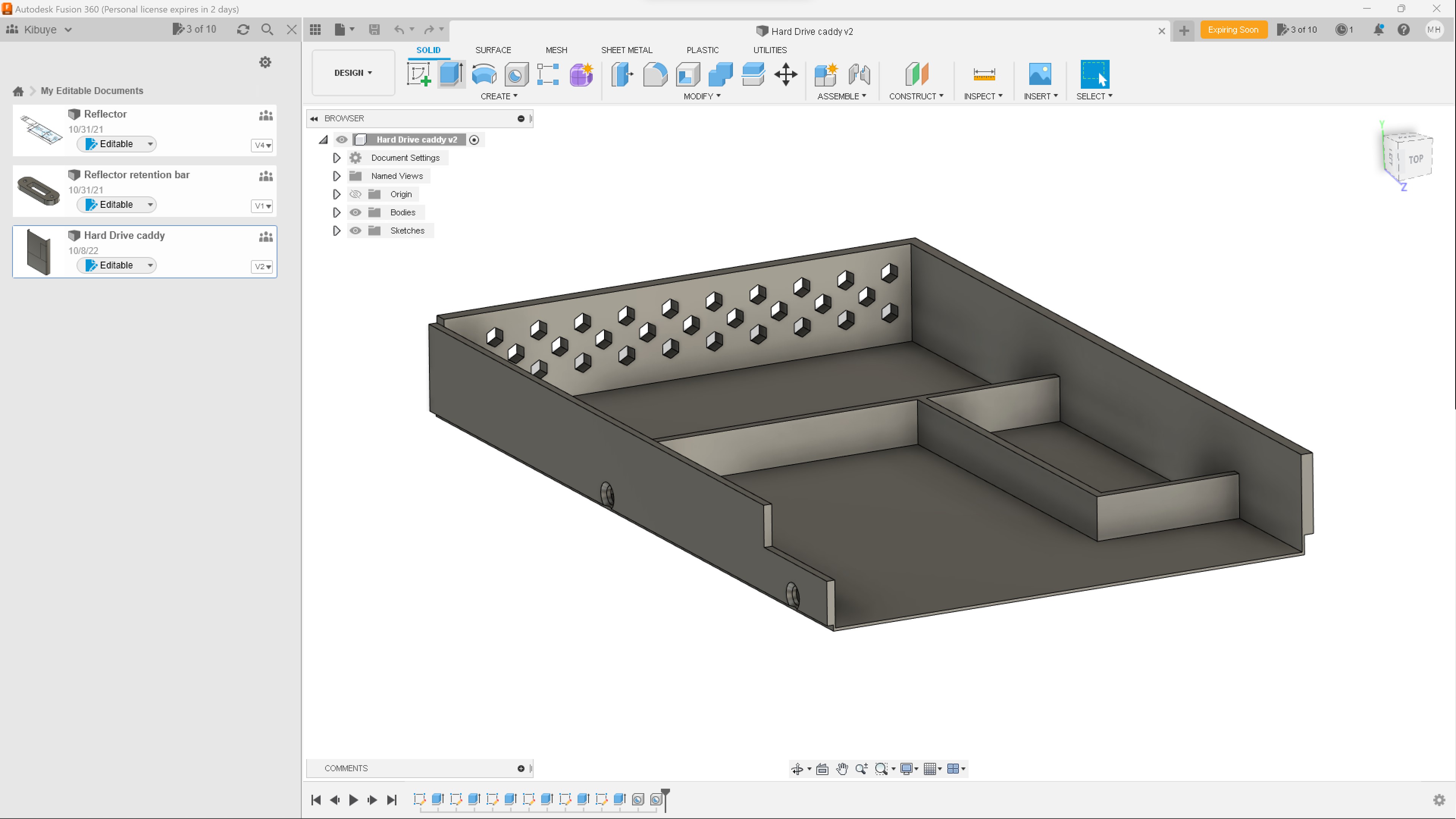
As a graduation present for finishing my surgical residency my in-laws bought me this printer:
16.10.22
New Teammates!
It seems like there are always comings and goings here at Kibuye, with the comings of course being more fun that the goings! We wanted to take chance to introduce you to some of our new current/upcoming teammates.
First of all, we are really excited that after many years of prayer for an engineer to support Caleb Fader in his many crucial roles at the hospital, we were approached by an awesome couple that has been living in Bujumbura for the past few years. Craig is a mechanical engineer and Vanessa has a masters degree in sustainable development. They and their two young children, Wren and Bram, are currently raising support in the US and are hoping to arrive at Kibuye sometime in January. If you'd like to help support them, click here.
Secondly, as we've posted about many times before, teachers are essential to our team's health and longevity here at Kibuye because they shoulder the majority of the task of our kids' education. We have absolutely loved having our current three teachers here these past several years, and are thrilled to announce that one of them, Jenny Sorondo, has decided to stay on as a long term teammate and teacher. She'll be needing extra support as well as she transitions from short term to long term (if you're interested, click here).
Joining Jenny in fall of 2023 will be a new teacher, Meg Strickland. Meg is currently teaching elementary school in Georgia and will be coming to work at KHA for two years. You can support her here. And finally, speaking of teachers, we are still in need of one more teacher starting in the fall of 2023 for (preferable) middle school ages if you or anyone you know is interested in hanging out with some totally awesome, fun kids (not that I'm biased).
And, while I'm mentioning new teammates, I also wanted to introduce Dr. Selina Thomas. Selina arrived at Kibuye in June through the Samaritan's Purse Post Residency Program for two years (and hopefully longer!). While we have had, and even currently now have, post residents serving at Kibuye before, Selina is our first primary care/non-surgeon. She's residency trained in family practice, which means that she's very versatile. We've enjoyed getting a chance to have her rotate around on our different services and she has been a great asset.
10.10.22
Kibuye Pediatrics Video
![]() |
| Kibuye Pediatrics Team |
2.10.22
A Kibuye Sabbath Poem
(from Eric)
and I am drawn again
to wrestle with the cantankerous back door lock
in order to walk out onto the back porch.
26.9.22
A Creative Take on Passports
20.9.22
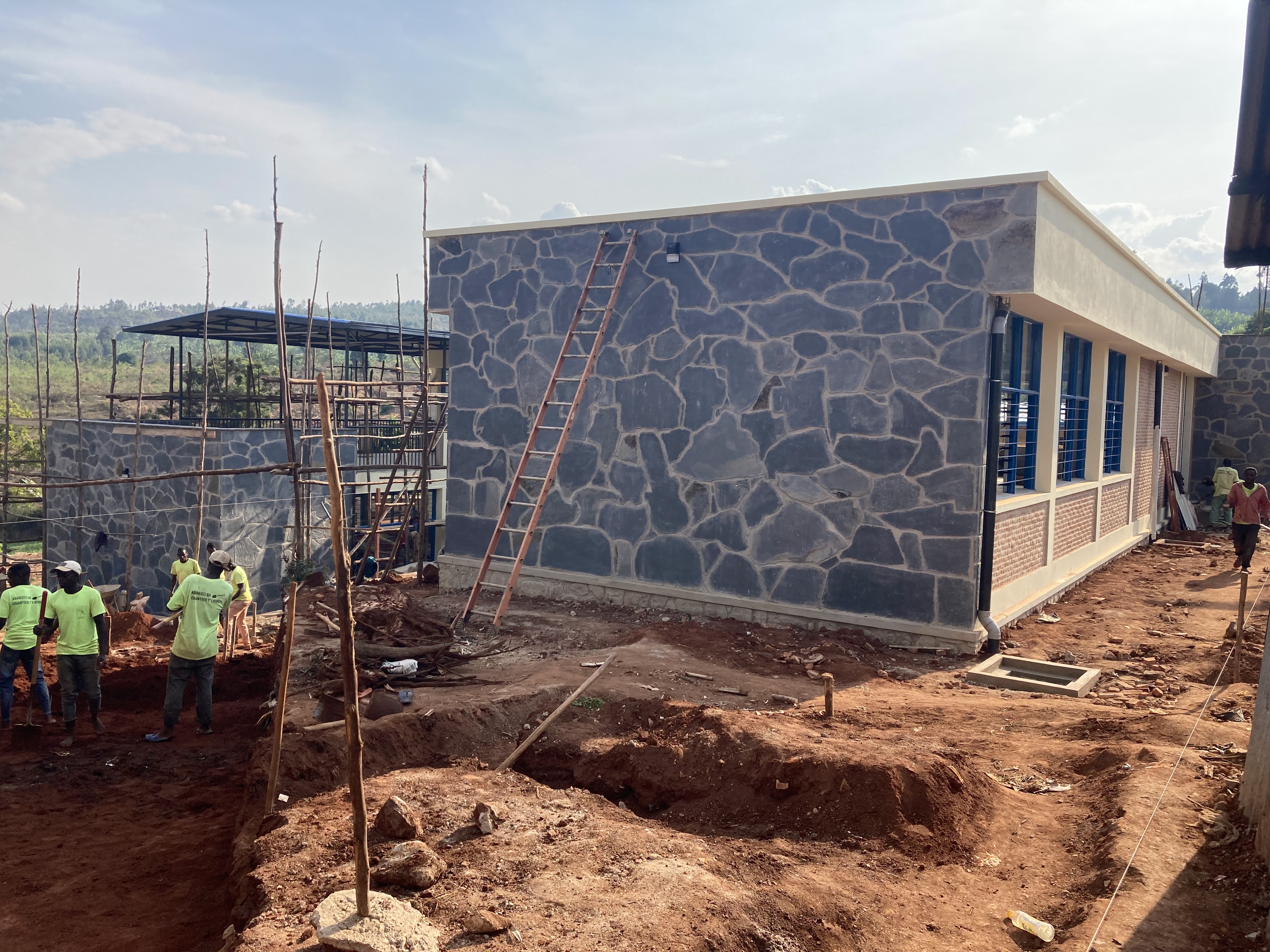
Kibuye Construction Update
(By Caleb)
It seems like it has been a minute since I've posted anything regarding current construction efforts at Kibuye. In addition to one larger construction project we are doing a lot in the way of shoring up the basic infrastructure of power, water, and internet. So here is what's happening in my world:
Student Center
Typically medical students at Hope Africa University spend their first three years in Bujumbura in the classroom. They then move up to Kibuye for their next three years doing their clinical rotations in addition to taking various courses taught by Serge faculty and others. Many of these students come from Bujumbura and find that life can be a bit slow up here in our rural setting.
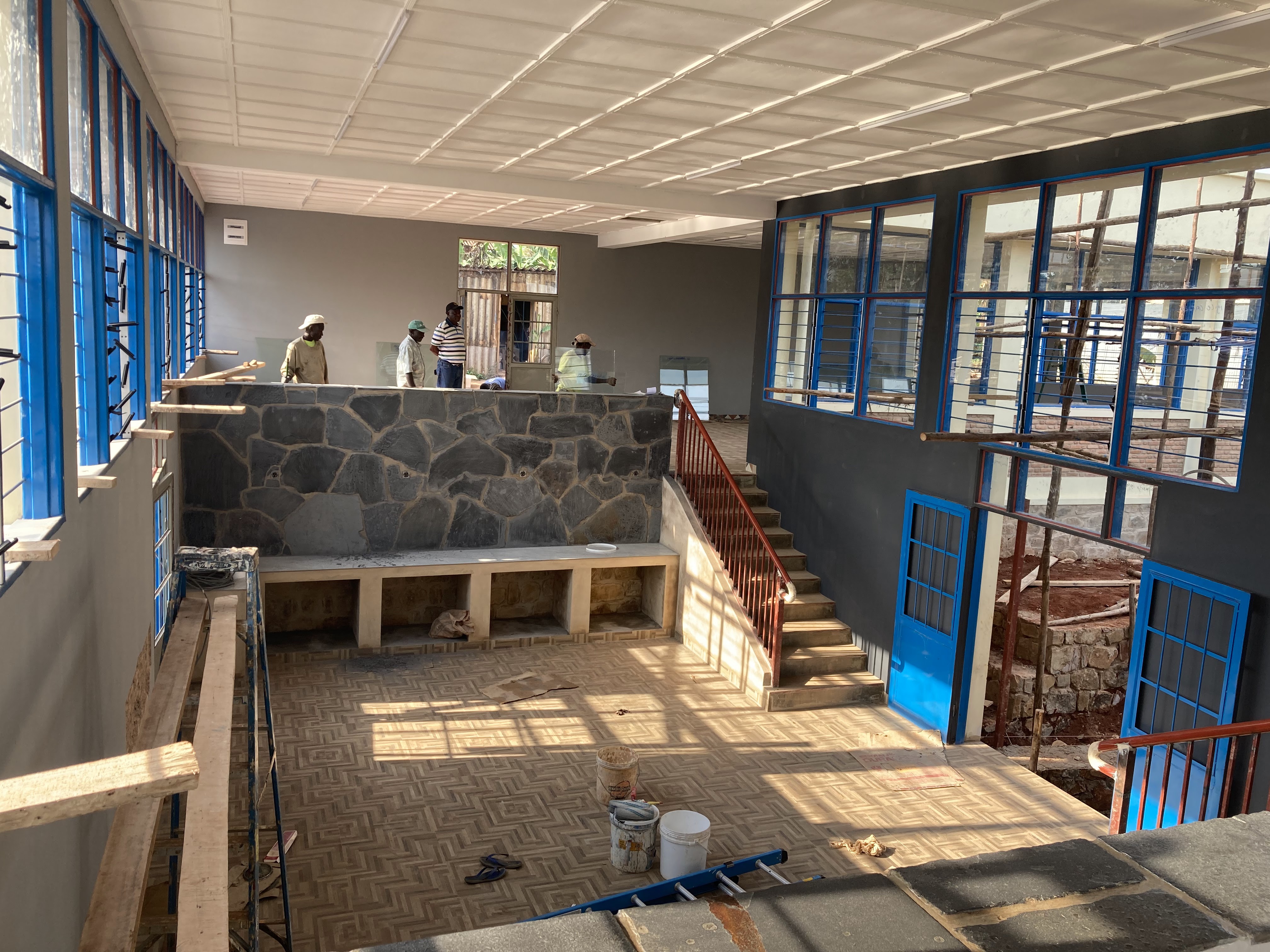
A few years ago, Matt Lembelembe (an eMi architect) was here filling in for me while my family was on home assignment. He was asked to design a student center that would house three main functions: a cafeteria, a library, and a place to relax and hangout. Matt came up with a wonderful design and thanks to funding from AMH we are a few short weeks away from completing the construction. I have no doubt that the students will really enjoy this space for years to come.
| The library will be on the first level and an upper terrace will allow the students to take in the beautiful view of the Burundian countryside. |
| The middle section where the students will be served daily meals. |
| Matt incorporated some interesting architectural features like the way the roof is hidden behind a parapet and the fun stone work at the ends of the building. |
| Our masons getting the alignment of one of the support legs just right. |
| The future site of the expanded solar field. |
| A view from across the valley of the new solar site as well as the new pediatric building and maintenance area. |
| The site of the new water reservoirs leveled and cleared and ready for construction. |
| Micheal and his eager assistants. |
5.9.22
Teaching Pediatrics To Interns in 3 Months: A "How-To" guide
- As one about to teach Pediatrics in Burundi, I took everything I ever learned in my Peds training and put it into a context of a developing country with low resources with diseases not commonly found in the United States.
- I started making powerpoints that fit the needs of what I needed to teach each week.
- Little by little, I translated powerpoints into French. (because honestly my medical French was not that great. "Blueprints" is in English, and I needed to know how to say many of these things in our "work language" - French.)
- I gave a 1-hour lecture per week for 3 months on 12 important Pediatric topics.
- After giving lectures for a few months, I realized that maybe I added too much of what I shouldn't have (minutiae regarding specialty labs, MRIs, etc which are difficult to find in our context), and not enough of what I should have (more on physical exam, treatments that are available here, etc).
- Re-vamped lectures.
- I gave these lectures weekly over 2 years during our first term. I made small adjustments after each lecture, trying to taylor the learning time to fit the needs of the learners. I added in French articles from time to time on difficult subjects.
7.8.22
Interesting Cultural Facts and Observations from Living Abroad
(by Michelle Wendler)
So after living on three different continents over the last few years and traveling pretty extensively, here are some observations.
1) Beauty is culture-specific. For example, here in Burundi, being heavy (fat, overweight) is considered beautiful. To compliment someone you tell them how fat they have gotten and describe the body parts that appear especially fat. To tell someone they are thin is a huge insult! (don’t ask me how I know this…)
2) Sealed off houses and climate control is more of an American thing. So far I haven’t stayed in one international house (hotels are different) that has climate control (like whole house heating and air conditioning). People open windows, use fans, or fire places (or portable heaters). This has very real implications in Burundi at elevation (brrrr. lately it's been getting down into the 50's F in our bedrooms at night) and in France when a heat wave strikes (sweltering).
3) Cold cereal options outside of America are: Corn flakes, and cocoa clams / flakes / balls. Basically I haven’t found many options outside of this in Europe or Africa, except Muesli, which is oatmeal with raisins or seeds mixed in.
4) Carpet is an American thing.
5) Wearing shoes inside a house is a big no no internationally. We have gotten so used to taking our shoes off when we go inside that when we were reading a book to Gabrielle the other day and it showed kids inside at the dinner table wearing shoes she couldn’t stop commenting that "they are wearing their shoes inside!“
6) Drinking a lot of water (like during meals, and carrying a water bottle or thermos around with you) is really an American thing. Here in Africa I hardly ever see people drink water…I mean I know they do….but I never ever see it. And at meals if I offer it, they will only drink after the meal is completely over but never during. In France, if you carry a water bottle around with you as you go shopping or walking you may get snide remarks like “are you a dog that needs to drink water all the time?” Oh and I should also mention that ice isn’t a European or African thing. They think it’s really unhealthy to drink something cold.
7) Sleeping with head out of the covers (even babies and children) is not a Burundian habit. They think it’s so weird that we don’t sleep with our head under the covers. It makes since though…because that keeps them protected from mosquitos and other things that may be crawling inside the house at night.
8) And finally, certain colors aren’t considered gender specific here in Africa. Pink, purple, red…flowers etc…men and women can wear these no problem. The brighter the better.


.jpg)
.jpg)
.jpg)
.jpg)
.jpg)

.jpg)
.jpg)