16.10.22

New Teammates!

It seems like there are always comings and goings here at Kibuye, with the comings of course being more fun that the goings!  We wanted to take chance to introduce you to some of our new current/upcoming teammates.

First of all, we are really excited that after many years of prayer for an engineer to support Caleb Fader in his many crucial roles at the hospital, we were approached by an awesome couple that has been living in Bujumbura for the past few years.  Craig is a mechanical engineer and Vanessa has a masters degree in sustainable development.  They and their two young children, Wren and Bram, are currently raising support in the US and are hoping to arrive at Kibuye sometime in January.  If you'd like to help support them, click here.

Secondly, as we've posted about many times before, teachers are essential to our team's health and longevity here at Kibuye because they shoulder the majority of the task of our kids' education.  We have absolutely loved having our current three teachers here these past several years, and are thrilled to announce that one of them, Jenny Sorondo, has decided to stay on as a long term teammate and teacher.  She'll be needing extra support as well as she transitions from short term to long term (if you're interested, click here).  

Joining Jenny in fall of 2023 will be a new teacher, Meg Strickland.  Meg is currently teaching elementary school in Georgia and will be coming to work at KHA for two years.  You can support her here.  And finally, speaking of teachers, we are still in need of one more teacher starting in the fall of 2023 for (preferable) middle school ages if you or anyone you know is interested in hanging out with some totally awesome, fun kids (not that I'm biased).

And, while I'm mentioning new teammates, I also wanted to introduce Dr. Selina Thomas.  Selina arrived at Kibuye in June through the Samaritan's Purse Post Residency Program for two years (and hopefully longer!).  While we have had, and even currently now have, post residents serving at Kibuye before, Selina is our first primary care/non-surgeon.  She's residency trained in family practice, which means that she's very versatile.  We've enjoyed getting a chance to have her rotate around on our different services and she has been a great asset.  

10.10.22

Kibuye Pediatrics Video

By Alyssa

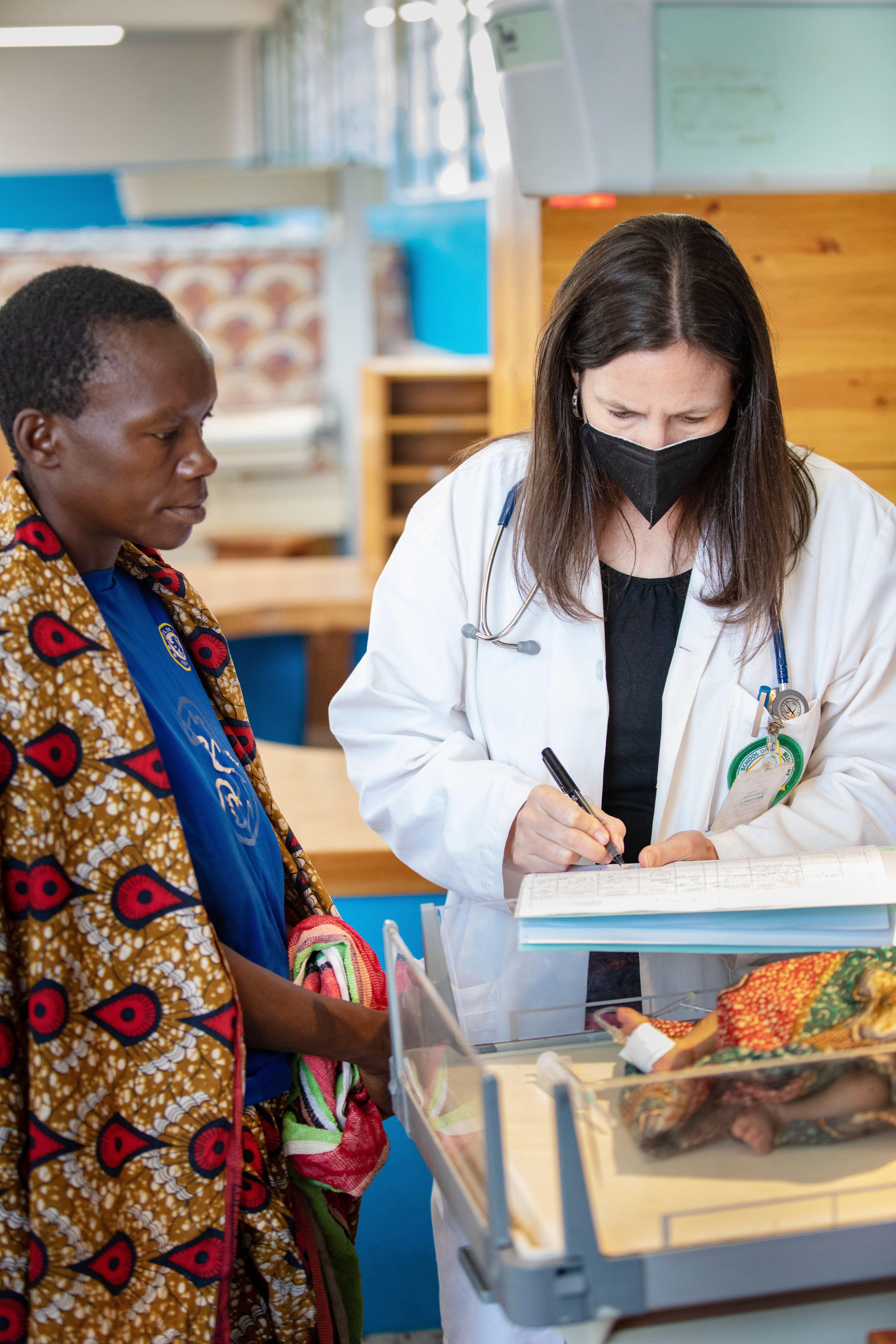
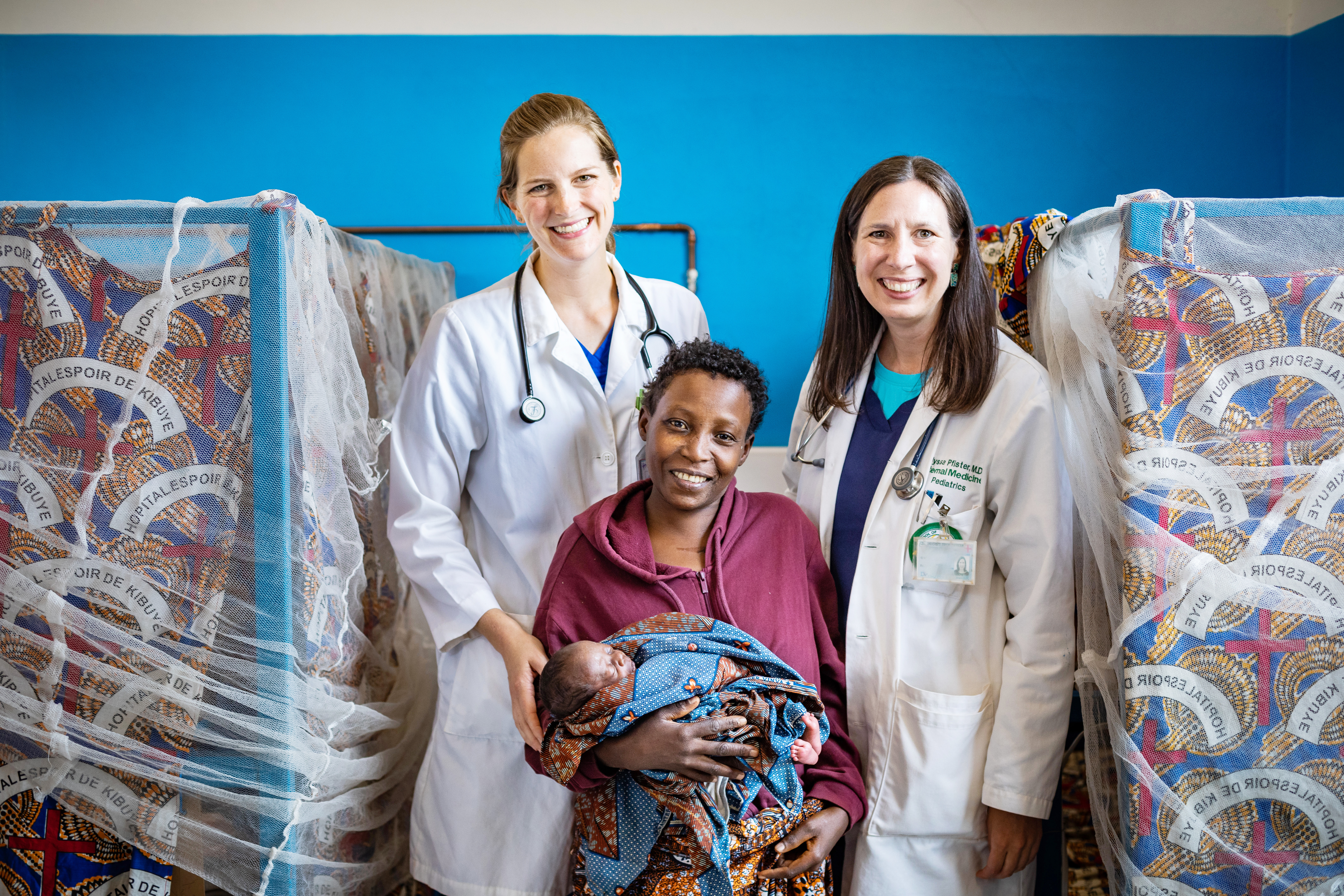
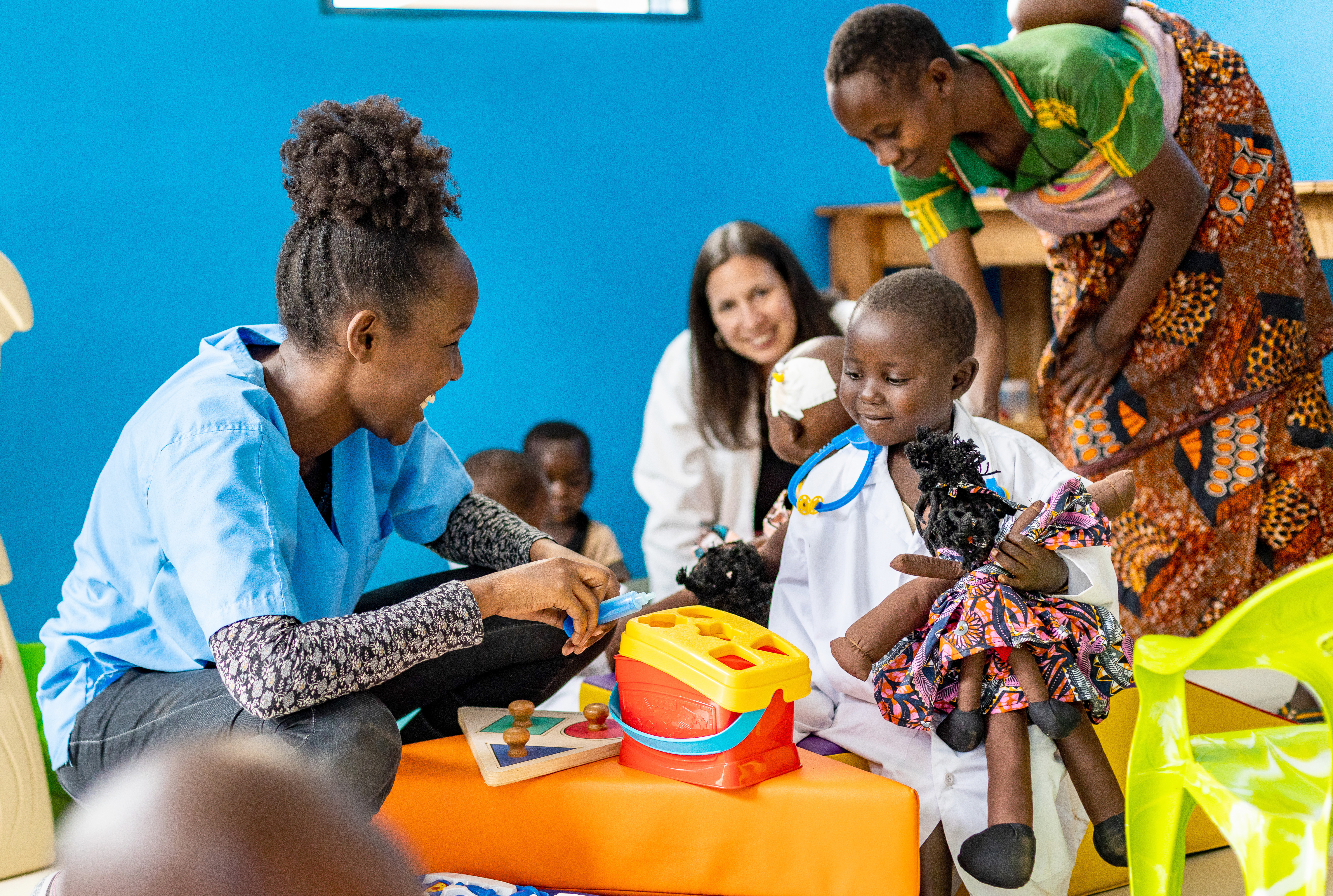
Thanks to the incredible work of Serge East Africa Media, we are happy to share this short video with you of the development of Kibuye Pediatrics over the last couple years! I love seeing the before and after shots of our new pediatrics building, and I also love that three languages and multiple Burundian and American voices are included here. Hope these images bring joy and encouragement to you today. Thanks so much to all who contributed to make our new pediatric building a reality! 

Click here to watch the video:

Kibuye Pediatrics Team


Photo credit for all photos in this post: Serge East Africa Media

2.10.22

A Kibuye Sabbath Poem

 (from Eric)

The day spins and the week whirls
and I am drawn again
to wrestle with the cantankerous back door lock
in order to walk out onto the back porch.

To look again on the line of trees
steady and long-suffering, 
though they bend constantly in the wind.
To hear the rustle,
bounding through the upper boughs
until they settle again exactly as they were.
To see the cedar and the bamboo and the hibiscus
planted as saplings by my friend
now reaching overhead and thriving,
rooted for the future.

In the shade of the porch roof,
the concrete is cool
unyielding and refreshing as an anchor.
The half-wall we built as a possible screened-in porch,
still open after many years,
and now a seat
on the edge of shade and sun.

The nearby bird-calls,
constant and so close,
yet I can never seem to find them.
The laughing dove, yes,
but this crescendo-ing call might be a chat or a shrike;
I'm not sure after all these years.
Domesticated mysteries.
Overlook them all your life if you wish,
they stand ready to be a source of wonder
whenever you would be open and quiet.

I return to the porch when the day roils,
to remember that it is,
and that there is something else.

The sunlight alternately dappled and matte
as the clouds move across a heaven so low
compared to the steadfast love of the Lord.

I return to be reminded who I am.
Where I am.
To see again a moment in a story
with a beginning and a flow and an end.
To feel again the warmth of the sun,
the brush of the breeze,
the crackle of grass at the end of the dry season.
To remember the textures, the layers
of unmerited glory that surround me
in the peace and the pain
of this given life.

26.9.22

A Creative Take on Passports

This year I have the privilege of teaching eighth grade for the first time, with two students who I had in class last year in 7th grade. These two are bright, kind, thoughtful, witty AND have had their feet in more countries in thirteen years than most people do in a lifetime. Their passports are well worn and full of stamps. One of my favorite occurrences in our classroom is when we are reading a novel or discussing a history topic and one of them pipes up with a big smile and says “I’ve been there!!”
Though there are many complexities in the life of a third culture kid, one that seems to come up often is the country of residence versus passport country conversation. In History this year we are tackling American Government, and that brings up the conversation of identity, what it means to have an American passport but having not spent significant time living on the continent stamped in gold on their passport cover. As we discussed aspects of their lives that feel American, English being their native language, some awareness (if not affinity for) American football, a love of Disney+ and Chick-Fil-A nuggets, there are others that come up that make them feel distinctly not American, like the fact that they greet neighbors in three languages, they have sat through 5+ hour worship services in one of the two languages that is not their first, they receive groceries in a basket on their doorstep every week, and they don’t have a cell phone at the age of 13. They talk about the fact that they know they aren’t Burundian, but they don’t really feel all that American either.
So, our first project in History class this year was to create a passport that felt like it represented their personal experience. Though we laughed at the idea of handing in a paper booklet at the Bujumbura airport’s border control, they both jumped at the opportunity to create a passport that felt individual to them. They designed the cover with colors or logos or designs that they feel represent who they are, they filled the inside with Burundian fabric and printed out stamps from the places they have been and the places they want to go. This week we hung those projects on our wall, so that as we study American government and we lose sight of why we study our country’s history when we don’t live there, we can look at a visual representation of who we are, colorful and bright and multi-cultural, also with the reminder that our true citizenship is in the Kingdom of God not in any Earthly country or region or continent. “But our citizenship is in heaven. And we eagerly await a Savior from there, the Lord Jesus Christ“ Philippians 3:20

20.9.22

Kibuye Construction Update

 (By Caleb)

It seems like it has been a minute since I've posted anything regarding current construction efforts at Kibuye.   In addition to one larger construction project we are doing a lot in the way of shoring up the basic infrastructure of power, water, and internet.  So here is what's happening in my world: 


Student Center

Typically medical students at Hope Africa University spend their first three years in Bujumbura in the classroom.  They then move up to Kibuye for their next three years doing their clinical rotations in addition to taking various courses taught by Serge faculty and others.  Many of these students come from Bujumbura and find that life can be a bit slow up here in our rural setting.  

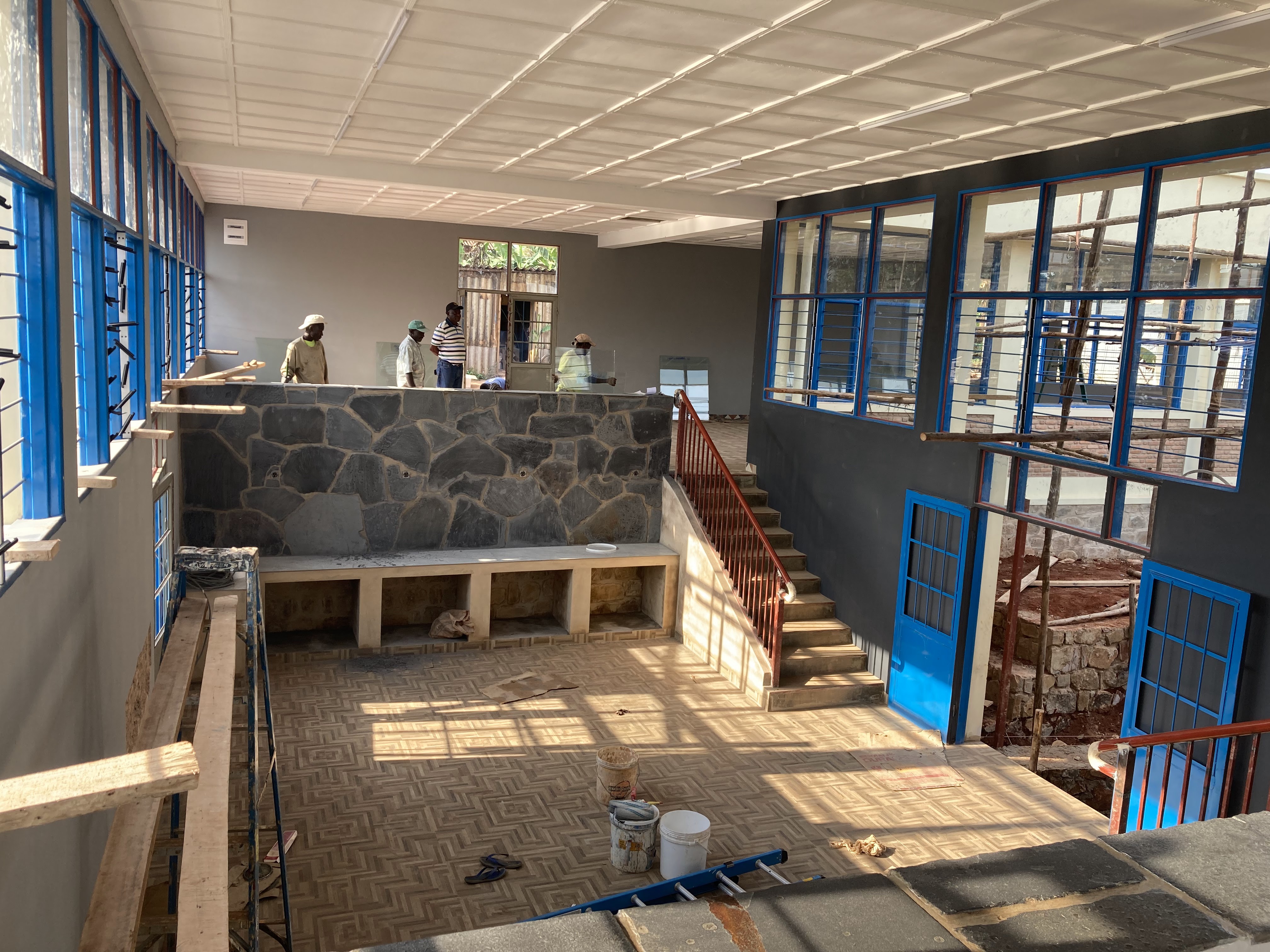
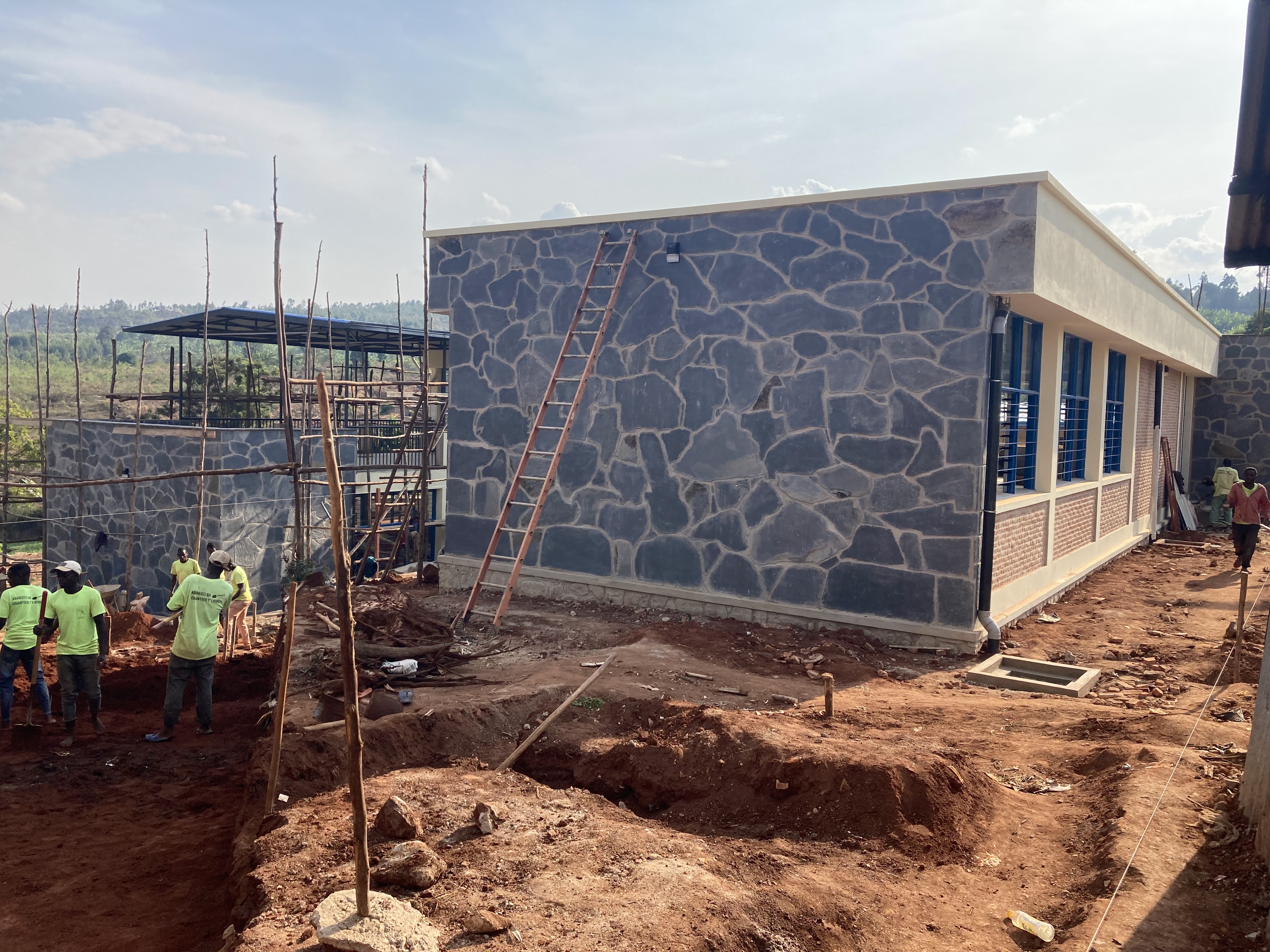
A few years ago, Matt Lembelembe (an eMi architect) was here filling in for me while my family was on home assignment.  He was asked to design a student center that would house three main functions: a cafeteria, a library, and a place to relax and hangout.  Matt came up with a wonderful design and thanks to funding from AMH we are a few short weeks away from completing the construction.   I have no doubt that the students will really enjoy this space for years to come.  

The library will be on the first level and an upper terrace will allow the students to take in the beautiful view of the Burundian countryside.  

The building has 3 levels.  On the right will be the hangout area with couches, pingpong, foosball, and other necessities.  The middle section will be where food will be served. And to the left will be the library and upper terrace.  

The middle section where the students will be served daily meals.    

Matt incorporated some interesting architectural features like the way the roof is hidden behind a parapet and the fun stone work at the ends of the building.  


Increasing Solar Power

As our facility has grown, so has our power demand.  With large donations from IMF, AMH, and Southwest Medical Clinic we are currently in the middle of a large power supply upgrade project.  Once again our friends at ITEC have graciously agreed to help us with the design and implementation.  Our solar field will more than double from 122kW to 284kW.  We will also upgrade our batteries from outdated lead-acid to the new Lithium Iron Phosphate technology.  It has been a logistical mind-bender as the pieces to this upgrade have had to come from all corners of the globe: panels and accessories from Pennsylvania, inverters from South Africa, and batteries from China.  

In preparation for the ITEC installation team coming in January of 2023, we have been busy with preparing the solar field.  15 of our strongest men literally moved a mountain to create the exact 10 degree slope to the north and the space to install these panels.  We are now building the structure which will support the new panels for decades to come.   


Our masons getting the alignment of one of the support legs just right.  

The future site of the expanded solar field.

A view from across the valley of the new solar site as well as the new pediatric building and maintenance area.  


Water Expansion

Similarly, as the hospital facility has expanded our water demand has increased significantly.  We are currently in a the midst of a project to increase both the quantity and the quality of our water supply.  Land has been leveled and prepared for some large storage reservoirs which we will begin constructing this month.  We have installed hundreds of meters of new pipe to upgrade our water distribution and will also install a new ultraviolet disinfection system.   

The site of the new water reservoirs leveled and cleared and ready for construction.  


Network Expansion

In addition to being an amazing surgeon, Michael Harling also has a keen self-taught understanding of networking.  He, along with the hospital's two IT technicians, has taken on the project of expanding a stable network across the hospital campus.  This has involved a lot of hot and dirty work like climbing through small attic spaces.  As one can imagine, these efforts will be greatly appreciated by our medical and nursing students as so many essential resources for education and research are available online.   


Micheal and his eager assistants.  

5.9.22

Teaching Pediatrics To Interns in 3 Months: A "How-To" guide

(by Jenn)

Spoiler Alert! It's impossible to teach all of Pediatrics in 3 months.  Thie blog post is more of a recounting of how I have ATTEMPTED to achieve this difficult challenge.

Many of you have probably heard of the "Stage Professionnelle" program that we offer at Kibuye Hope Hospital, a 12-month long rotating internship for doctors who have graduated medical school who want more training before heading off to practice medicine. They spend 3 months each on Pediatrics, Internal Medicine, Surgery, and OBGYN afterwhich they receive a certificate of completion.  So during these 3 months on Pediatrics, we try to teach them as much as we can... this is how we have attempted to do it...

Alyssa had already started a curucilum based on a book "Blueprints" which is a guid for basic pediatric ideas. It's usually used by medical students on their Pediatric rotation in the United States, but thoguht it woudl be a good base for doctors here, as there was a short period of time to learn things.  The goal was to cover one chapter a week. 

Then I arrived in 2019 and was asked to be / volunteered to be (becasue it sounded fun!)  heavily involved in the education of these interns.  Here are the "steps" I've gone through in morphing this curriculum which is still in flux! 
  • As one about to teach Pediatrics in Burundi, I took everything I ever learned in my Peds training and put it into a context of a developing country with low resources with diseases not commonly found in the United States.
  • I started making powerpoints that fit the needs of what I needed to teach each week. 
  • Little by little, I translated powerpoints into French. (because honestly my medical French was not that great. "Blueprints" is in English, and I needed to know how to say many of these things in our "work language" - French.) 
  • I gave a 1-hour lecture per week for 3 months on 12 important Pediatric topics.  
  • After giving lectures for a few months, I realized that maybe I added too much of what I shouldn't have (minutiae regarding specialty labs, MRIs, etc which are difficult to find in our context), and not enough of what I should have (more on physical exam, treatments that are available here, etc). 
  • Re-vamped lectures. 
  • I gave these lectures weekly over 2 years during our first term.  I made small adjustments after each lecture, trying to taylor the learning time to fit the needs of the learners. I added in French articles from time to time on difficult subjects. 
We ask for feedback from our interns after they ahve completed the rotation and one time someone said they wished there were more clinical scenarios accompanied by questions about treatment so they could learn what to do practically. 

My residency program director in Greenville, SC noticed a long time ago that our pediatric board pass rate was not great for our graduates. She created a ciruculum where we would study a chapter or two in our huge Peds textbook, would have 50 take-home questions that we would have to answer and turn in, and also would have daily lecutres for one month pertaining to the subject for the month. 

This commentary and feedback from the intern along with the curriculum that I went through during my 3-year pediatric residency made a lightbulb go off in my head.  What if I try to do something similar with the interns here!?

Now, along with continuously altering my teaching style, powerpoints, and material, I am starting to write questions (and then translating them into French) that are relevant to our context but also teaches them things that they may need to know if they ever do a pediatric residency in another country.  I'm hoping that this will increase their willingness to study/look for answers and ultimately improve the care provided to children in Burundi. 


I love this part of my job and consider it a priviledge to teach these docs.  Now, back to writing questions and translating them ◡̈ 


7.8.22

Interesting Cultural Facts and Observations from Living Abroad

(by Michelle Wendler)


So after living on three different continents over the last few years and traveling pretty extensively, here are some observations.


1) Beauty is culture-specific. For example, here in Burundi, being heavy (fat, overweight) is considered beautiful. To compliment someone you tell them how fat they have gotten and describe the body parts that appear especially fat. To tell someone they are thin is a huge insult! (don’t ask me how I know this…)


2) Sealed off houses and climate control is more of an American thing. So far I haven’t stayed in one international house (hotels are different) that has climate control (like whole house heating and air conditioning). People open windows, use fans, or fire places (or portable heaters). This has very real implications in Burundi at elevation (brrrr. lately it's been getting down into the 50's F in our bedrooms at night) and in France when a heat wave strikes (sweltering).


3) Cold cereal options outside of America are: Corn flakes, and cocoa clams / flakes / balls. Basically I haven’t found many options outside of this in Europe or Africa, except Muesli, which is oatmeal with raisins or seeds mixed in.


4) Carpet is an American thing.


5) Wearing shoes inside a house is a big no no internationally. We have gotten so used to taking our shoes off when we go inside that when we were reading a book to Gabrielle the other day and it showed kids inside at the dinner table wearing shoes she couldn’t stop commenting that "they are wearing their shoes inside!“


6) Drinking a lot of water (like during meals, and carrying a water bottle or thermos around with you) is really an American thing. Here in Africa I hardly ever see people drink water…I mean I know they do….but I never ever see it. And at meals if I offer it, they will only drink after the meal is completely over but never during. In France, if you carry a water bottle around with you as you go shopping or walking you may get snide remarks like “are you a dog that needs to drink water all the time?” Oh and I should also mention that ice isn’t a European or African thing. They think it’s really unhealthy to drink something cold. 


7) Sleeping with head out of the covers (even babies and children) is not a Burundian habit. They think it’s so weird that we don’t sleep with our head under the covers. It makes since though…because that keeps them protected from mosquitos and other things that may be crawling inside the house at night. 


8) And finally, certain colors aren’t considered gender specific here in Africa. Pink, purple, red…flowers etc…men and women can wear these no problem. The brighter the better. 


29.7.22

The Power of Testimony

by Julie


Luke 15:7 …there will be more rejoicing in Heaven over one sinner who repents than over ninety-nine righteous persons who do not need to repent.

Our testimonies can be a very powerful tool that God can use to strengthen believers, and to call non-believers into Himself. Over the course of the summer I have found myself sharing my testimony perhaps dozens of times. I’ve shared a couple times in front of groups of people... 

But mostly I have shared my story on long car rides, or across the dinner table. I’ve spoken recently with maybe a dozen parents who have adult children who are currently living in darkness, away from the Lord.  This is an all-too common story that breaks my heart, but at the same time, I know the saving power of Jesus Christ.

You see, I was an adult who had turned my back from God, from my parents, my church, and pretty much anything that had to do with Jesus. I was living my life for myself. I thought I was seeking freedom, but what I found was bondage. My sin was tangled around every part of my life, pulling me further and further into a pit of darkness. I was such a mess and was at the end of my rope financially, emotionally, spiritually, and every other –ly word you can use to describe your life! I was completely lost.

Even though I refused to have a relationship with my family, they prayed. They prayed and prayed. And I’m not talking about sweet bedtime prayers. I’m talking about battling in prayer. They knew that they were fighting a spiritual battle and that God heard their prayers.

Finally one night…August 21, 2004… I was completely gripped with anxiety and couldn’t sleep. I had had enough. I had been trying to do it on my own for so long, but I just wanted to get out of the messy life I had gotten myself into. Somehow or another I knew the answer was Jesus. But, what would I even say to Him? What could I say? Do I have the right to pray after everything I have done? I hadn’t prayed in years! 

I simply said, “Save me.” I whispered it again. “Save me.” I began to sob. My shoulders shook as I repeated this very simple prayer, “Save me.”

In that moment I was changed. I was pure. I was forgiven. I was loved. I was a new woman. Praise the Lord. It felt as if Jesus came into my life and completely swept away the mess I had made of my life. I was completely clean inside. My stomach untangled. I could finally… breathe. I was free.

This is a real-life image of what Jesus did in the temple as recorded multiple times in the New Testament.  

Matthew 21:12-13 Jesus entered the temple courts and drove out all who were buying and selling there. He overturned the tables of the money changers and the benches of those selling doves. “It is written,” he said, “’My house will be called a house of prayer,’ but you have made it a den of robbers.”

He turned over every table. He chased out every corrupt act from His temple. This is what He did for me. He cleansed me! Why? Because we are His temple.  

1 Corinthians 3:16 Don’t you know that you yourselves are that temple and that God’s spirit dwells in you?

Every time I share how Christ saved me, the worst of sinners, I am once again reminded that Jesus continues to forgive me everyday. He loves us so much. I know that I was finally open to that love and was showered with grace because of my family’s prayers. Prayer works. God hears you. Keep praying. 

So, what does this story have to do with Burundi? Maybe it doesn’t have anything to do with it. Or maybe it has everything to do with it. I am telling you, if some people who knew me 18 years ago found out that I was a Missionary today, they would laugh, or maybe not even believe you. Take courage that no matter where you have been, no matter what you have done - God’s grace is bigger. The blood of Jesus washes away all sin. Every single sin. And God has a plan for your life. You are never too far gone. Your son or daughter is not too far gone.

“Jesus, I pray that You storm into my life, Your temple. Turn over any table that shouldn’t be there. Chase out any unclean thing from my heart. Cleanse me, purify me like only you can. I want to live for You with all that I have.”

You see, the Gospel is not a story that you only need to hear once. I know I need to be reminded that Christ died for my sins and that He continues to forgive me and cleanse me from all unrighteousness.

I was recently asked to speak at a village church not far away from Kibuye. After reflecting on these very thoughts, I shared my testimony with them and told them how much Jesus loves them. The altars flooded with people repenting and asking God to cleanse them. At least one young woman came to Christ for the first time, Hallelujah! Heaven surely rejoiced.


So if you’re reading this and you are a follower of Christ, let me encourage you to share your testimony with someone! Redemption is a powerful thing, and maybe someone needs to hear your story of how Jesus redeemed you. And then pray. Pray for us living at what feels like the “frayed edges” of the world. Pray for Burundi. And pray for salvation across the globe.

If you’re reading this and you don’t know the Lord, or have not ever had a life-changing encounter with Jesus Christ, let us know and we will pray for you and with you. God loves you and has a plan for your life. Trust me, God's plans are always much more exciting than any plans we could make for our own life!

If you're reading this as a parent much in prayer for your son or daughter, be encouraged. Your child's story is not finished, this is just where you are in the story right now. But keep praying. If you would like to hear a little bit more of my story, you can watch this testimony video that my home church put together a few years ago. Reach out to us and we will pray with you. And just like Heaven rejoiced when I surrendered my life to Jesus, and just like they rejoiced a couple weeks ago for the woman at this village church who made a decision to follow Christ, we will pray for a day of rejoicing the day your child accepts Jesus as her Lord and Savior! Who knows, maybe she will become a missionary one day sharing her testimony of how God didn't give up on her. Praise the Lord!


23.7.22

Sharing in the Joys

 by Rachel

Last night we had the new HAU medical school dean and his family over for dinner.  It was a fun evening to get to know some new friends and continue to practice my social French!  As typical of such evenings, the conversation eventually turned to differences between American and Burundian cultures.  Our friends were going to their family home upcountry to present their six month old son to the family and give everyone a chance to meet the baby.  He remarked that Burundians have many different celebrations, and we agreed...and mentioned that, in fact, most of those celebrations are totally different than ones we celebrate in America.  I was reflecting on all the opportunities that we've been given these past nine years to enter in to the lives of our friends, colleagues, and employees here--we are definitely the strange and the strangers here and to be invited in to these (typically) family parties has been a privilege and unique cultural window that we are very grateful for.  And, Burundians are very good at celebrating!  The parties are quite different than American parties (normally there is a lot of sitting and drinking Fantas, then speeches and prayers, followed by an occasional meal), and involve some waiting (we are always "early"), a lot of minimal understanding of what is going on (Kirundi), but at the end a general sense of happiness that we were able to participate in these special moments.

Peace and Alain's new baby, Nineza (it is good)

For example, one unique ceremony that almost everyone celebrates here in Burundi is the "Baby on the Back" ceremony.  When a newborn baby is old enough, typically around one month of age, the new parents will invite their families and friends to a party where, after the eating and drinking and speeches and prayer, the family will place the baby on the new mom's back for the first time.  Burundian moms almost always carry their babies on their backs, leaving their hands and heads free for other work and transport, and are practically wizards at using a towel or blanket to secure their baby well.  I tried it once with rather poor results...thankfully I caught Toby before he hit the ground!  We were able to attend a ceremony like that last weekend, in fact, and my favorite part was watching the joyful singing and parading around the pavilion once the baby was successfully well secured on the mom's back.  A celebration of life, to be sure.


Another ceremony that many of us have attended is something called a "dote."  Weddings are commonplace and easy to understand for us, but the dote is something different.  It's classically more of an engagement party in which the family of the bride to be and the family of the groom to be meet, sometimes months before and sometimes days before the wedding, and agree on the dowry or bride price to be paid.  I have heard that by the time of the dote these details have all been decided upon ahead of time, and everyone is going through the motions in a good natured "haggling" sort of way, until finally the bride is ushered in and presented to there groom and his family.  Also in years past, there were actual cows exchanged, but now apparently you can just provide a monetary equivalent to the value of the cows.  The last dote I attended was a little over a year ago, and it was a joy for me to celebrate the upcoming wedding of one of my amazing and talented generalist physicians at Kibuye.

Christiane and Methode

Finally, to complete the circle of life, the last unique ceremony that we've been able to be a part of is something called the "Levée de Deuil".  Literally translated, this is the "end of mourning."  After someone dies, there is a funeral and a period of mourning, sometimes a few days and sometimes a few weeks, depending on factors like the age of the person.  At the end of that mourning period, family and friends gather to celebrate the life of the person who died as a sense of closure and remembrance.  Eric actually attended one the first few months we were here in Kibuye, and wrote a blog about it here.  I think it's a really sweet sentiment actually, and our friends were particularly surprised to hear that nothing like this is celebrated in American culture.  

In addition to the above three, there are many other opportunities to celebrate together with our Burundian friends.  Sometimes it's as simple as saying goodbye to a colleague who's leaving the hospital for more training, and we share drinks and prayers.  Sometimes it's a medical school graduation or a thesis project finally completed; a new doctor launched into society.  Last year we were able to attend the baptism of our former nanny's daughter, which was very special.   In all these things, we remember the value of sharing these times together in community, like the verse in Romans 12: Rejoice with those who rejoice, weep with those who weep.  Again, we are grateful to be included in these moments, and have learned much from our Burundian brothers and sisters. 


Goodbyes to some Stage Professionals:


Thesis defense and medical school graduation:


Kessia's baptism and party:


16.7.22

New Chaplains and New Chapels

 (from Eric)

When our team returned from the Serge conference last month, we found a new face leading morning chapels at the hospital.  Last year, after decades of faithful service, Pastor Pascal Nyawenda retired from his role as a Kibuye Hospital chaplain.  Now, Pastor Mélance has arrived to fill that void, joining Pastor Silas and Madame Pascaline on the chaplain service dedicated to spiritual care at the hospital.  It has been a joy to see the enthusiasm and energy that a new person has added to the team's work.  We see them praying with inpatients and outpatients, and if you take the time to ask them, they will enthusiastically share stories of healing, repentance, conversion, consolation and faithful presence.

Pastor Mélance, Pastor Silas, and Madame Pascaline

One of the things that I love about our chaplains is that they embrace not only the spiritual care of patients and their family members here at Kibuye, but also the employees and the numerous students that pass through the hospital at different stages of training.

Ever since the beginning of the Covid-19 pandemic, it has been a challenge to decide how to handle the long-standing practice of daily times of morning prayer/singing/devotions from 7:30 to 8:00 each morning.  After trying a number of different models, the hospital leadership restarted this practice a couple months ago.  The response from students and staff has been encouraging with an enthusiastic participation.

The chaplains' response to this was to reflect on how best to use this reinstated time to engage well those that are involved.  They are planning a number of different activities, but one of them is to dedicate one week per month to a thematic message.  The idea is, instead of a different speaker and theme each day, there will be one speaker on a chosen theme who will give four different messages from Monday to Thursday, and then Friday will be dedicated to Q&A.

I had the honor of being the inaugural speaker for a theme week, the chaplains asking me to speak on "Walking with Those who Suffer".  On Monday, I spoke on suffering according to the Bible.  On Tuesday, I spoke on the significance of a God who has suffered and died.  On Wednesday, we talked about consoling the sufferer, and on Thursday, we talked about Finding Hope.  Even this week, it seems that these messages have changed the tenor of some of our conversations about our work in ways that I think are positive and authentic.


I wasn't sure what to expect in the Friday Q&A.  I appreciated what the chaplains were doing by leaving that time for more interactions, but I wasn't sure how people would respond.  After an initial long silence, the questions started to come and had no difficulty filling the time.  They asked about God's redemption of evil and the presence of temptations in their lives.  They asked why prayer matters if God is sovereign.  They asked about the difficulties of caring for the whole person when the work is voluminous and overwhelming, as well as the proper way to talk about the offer of eternal hope with someone who has just receiving hope-shattering news.  In other words, they didn't pull any punches!

Pray for these chaplains in the months to come and for the patients and staff and students that they will impact.