27.1.18

6 months later

(By Alyssa)

I returned to Burundi this month after six months of "home assignment." I'm thankful for the sweet times with family and friends, the continuing education opportunities, the fundraising God enabled me to do, and the creature comforts of life in a more developed place. But I was definitely happy to return to my Burundi home! And I was enthusiastically welcomed back by the team:


Six months is a time period that feels both short and long. I wondered what Burundi would look like on my return. Well, except for some new traffic lights (!) in Bujumbura, things looked about the same - until I got to Kibuye! I thought you might be interested in what has changed here in just 6 months (lots of pictures to follow):
 The biggest change is the beautiful new surgical building which opened shortly after I left in July.

New minor OR for wound care, etc. - a huge improvement over the old space! 
Surgical ward with unique new bed design with privacy curtains
Surgical ward nursing station

And as we enter the season of respiratory infections, it makes such a difference to have this new oxygen concentrator. For the first time we have wall oxygen in the NICU and in other key places in the hospital - life saving treatment!
We're not quite ready to begin construction on this new 80 bed pediatric ward, but in the meantime, renovations of existing space have increased our bed count just in time for the rainy (malaria) season.
New temporary pediatric ward
Renovated pediatric room to open soon
 Now that surgery patients have a new building, internal medicine has renovated their old space - new ceiling, beds, windows, etc. Previously one of their patient rooms (for 5 patients) had no windows at all - which meant it was pitch black even in the middle of the day when the power was out! So this is a great improvement!
New internal medicine call room
New internal medicine work space and nursing office
 Physical therapy has a newly renovated space, too, complete with equipment for helping patient rehabilitation. 

And new patient showers and toilets
There are lots of solar panels around now including this one for heating water in the laundry. And more solar panels will be coming soon to improve our electricity! 
Infrastructure is absolutely essential! Here's our new water reservoirs hooked up to the second well  providing water for the hospital. These tanks hold 100,000 liters of water! 
Even the emergency department got a makeover with new curtains, paint, cupboards, etc. 
New isolation ward mostly for tuberculosis patients
Isolation ward
New landscaping by our second ophthalmology building which opened shortly before I left
 And the residential area is expanding, too. Above is Caleb and Krista Fader's newly completed house and below is Logan and Julie Banks' house under construction. 

But six months doesn't just bring many new buildings/renovations, but also brings new babies like these sweet boys. Francine (left) helps clean and cook for me 3 days per week, so I now have a pack n' play set up for her baby in my dining room - not that I've figured out how to assemble the pack n' play (I think you need an engineering degree for that!) 

 And all the kids have definitely grown - above the middle schoolers have kindly volunteered to teach preschool in the afternoons to these 4 year olds
And the guinea pigs have grown, too ;) 
It's fun to participate in chapel again at Kibuye Hope Academy on Fridays - though we're missing friends from last year and paradoxically also thankful to have new kids here this year
Medical students have definitely made progress. Above are four successful thesis presentations from last week. These students have come a long way as we've seen them from the beginning of their clinical years until now. They'll graduate next month! And in general, the quality of theses has improved over the last couple years. 

And finally, team life is both different and the same each season. As I said above, we both miss teammates who are now in the States and are thankful for new and returning ones. There's a new book for book study and different special imported treats (thanks, Miller family, for the cheese and crackers!), but the general rhythms remain the same. It's a joy to walk through the ups and downs of this Burundi life together! 

23.1.18

The Marathon

(by Greg)

I do not like running.  If someone has told you that I do, they are either misinformed or a liar.  I feel quite confident that God did not create my body to run.  I believe He created some bodies to run, just not mine.  I more enjoy a nice stroll.  I also appreciate a comfortable chair.  

Nonetheless, in Burundi, I try to run two or three times each week, in a vain attempt to stave off death.  I have yet to find a 24 Hour Fitness in Kibuye.  I run with teammates, teammates whose bodies I suspect were in fact created to run, and I am happy for them.  And I enjoy our time together.  However, I would enjoy it more if we were not running.  

As I have been huffing and puffing my way up and down the hills of Kibuye, I have had a lot of time to think about the difference between a marathon and a sprint.  If you asked me to do one or the other, I would choose the sprint.  I like things to get done fast.  I like a finish line that I can see.  But the work we have entered into in Kibuye is not a sprint, it is a marathon.  While there are projects that take place over weeks or months (eg. a new surgical ward, the installation of an oxygen concentrator), the big changes we are working toward will take place over years, decades and perhaps generations.  We are here working for transformation in healthcare in Burundi and gospel transformation in the lives of our students and our community.  For these, it is much more difficult to see a finish line in sight.  

Working toward this sort of long term vision runs counter to all my natural instincts.  I went into anesthesia, partly because I like to see the beginning and end of a project in the course of a day.  I did not choose internal medicine, in which you might prescribe a blood pressure medicine for a patient with high blood pressure, then see them again in 3 months and maybe slightly adjust the dose, then see them again in another 3 months.  No no, I certainly do not have the patience for that sort of work.  When presented with a patient with hypertension, I want to squirt something in their IV and watch as the blood pressure falls over the course of seconds.  Much longer than that and I am prone to lose interest.  

I realize that in my own power, I cannot run this marathon.  I have to rely on the strength of another, someone who can provide me with the endurance and patience I need to get out of bed everyday and labor toward goals with no end in sight.  Without faith in Someone guiding me, leading me, reminding me of the hope I have in Him, I would likely throw in the towel.  Thankfully, I do not do this work alone, but instead am surrounded by a team who can remind me why we are doing this and who we are doing it for.  And I get to run each day with Someone who has the strength and the endurance and the vision to accomplish these goals, Someone who has the stamina and the steadfastness to get to the finish line.   For now, I just need to keep my eyes on Him.


Therefore, since we are surrounded by so great a cloud of witnesses, let us also lay aside every weight, and sin which clings so closely, and let us run with endurance the race that is set before us, looking to Jesus, the founder and perfecter of our faith, who for the joy that was set before him endured the cross, despising the shame, and is seated at the right hand of the throne of God. - Hebrews 12:1-2


21.1.18

There is no fast food in Kibuye


By Michelle

Hello Everyone! I thought I’d give you a glimpse into what life is like here on a daily basis when it comes to food preparation. Julie wrote a great post on this topic (Kibuye Kitchens) but I'll touch on some different elements. 

Food shopping:

There are no supermarkets in Burundi and the only “store” closest to us is in Gitega. While our food choices are limited, we are thankful to have food and to eat on a daily basis. Sadly, with many of those in our community this is not the case. 

Each week we place a produce / food order that looks like this:


I have found that meal planning is a must when one is limited to getting food once a week. If you run out of something midweek, you usually can borrow from your neighbor. But on the plus side, this gives us women a chance to communicate on a daily basis. 

The food arrives in a basket like this. 


There is a market behind the hospital that has a few options such as eggs, tomatoes, avocados, onions, pineapple, and carrots.

Gardening: 

The food options here are seasonal. If something is not in season, then you wait until it is. The last few months we had lettuce in the garden: 


But now that it’s been used up we need to wait until more grows before eating salads again. It definitely teaches you to be patient and to be thankful for what you have!

Extras:


Milk is delivered a few times a week: When it arrives you need to cook it for a period of time, then let it cool and strain it before putting it in the refrigerator. The availability of fresh cow milk is a recent luxury for which we are very thankful. 
In Gitega we can can buy bags of flour, sugar, and rice. If you want any kind of bread product, you or your house helper needs to make it from scratch. There's nothing like freshly made bread!


The cheese we can buy comes in wheels and is made in Congo. It's not always the best quality but we are thankful to have cheese! 


It is very difficult to buy meat other than goat meat in our area. There is a butchery in the capital that has more options so we have found that if one has the freezer space it's best to stock up and eat sparingly.


Our team has put together a cookbook that uses mostly the limited ingredients we are able to get. Check it out! There are some gems in there!

Kibuye Cookbook

Speciality meals: For Christmas, Carlan and I made a lasagna with cheese we had made from scratch, freshly made pasta noodles, sauce from scratch, and herbs grown in our garden. It took a lot a work but it was worth it!


Kibuye gourmet: Fried Termites. For those with a strong stomach there is always something new to try.


Conclusion: Each time we buy food, we are thankful for the hard work of many that had to grow, pick and transport this product by manual labor:


16.1.18

Beautiful Burundi

(from Eric, with help from everyone)

Burundi, like anywhere else, is a mixture of brokenness and beauty, of glory and shadow.  And this blog has told its share of tragedies.  Today, however, we'd like to honor the goodness and the wonder that is around us in Burundi, country of a thousand hills, country that reflects the glory of its Maker.

So here's a feast of photos that we've collected over the years.  There are two focal points here.  The first is the beautiful green landscape.  The second is the beautiful people of Burundi.  Over the years that we have been here, the people of Burundi have been examples to us of joy, love, enduring forgiveness, hard work, undying hope, intelligence, and great kindness.  We have seen faith and self-sacrifice that we pray that God will enable us to emulate.

Voilà!  Beautiful Burundi:


5.1.18

Heroes Come In All Sizes, or, How Guinea Pigs Exemplify Christ

by Carlan

[Trigger warning: this post involves a story about experimentation using animals. To skip to the spiritual lessons learned, skip down to "Heroines #1".]
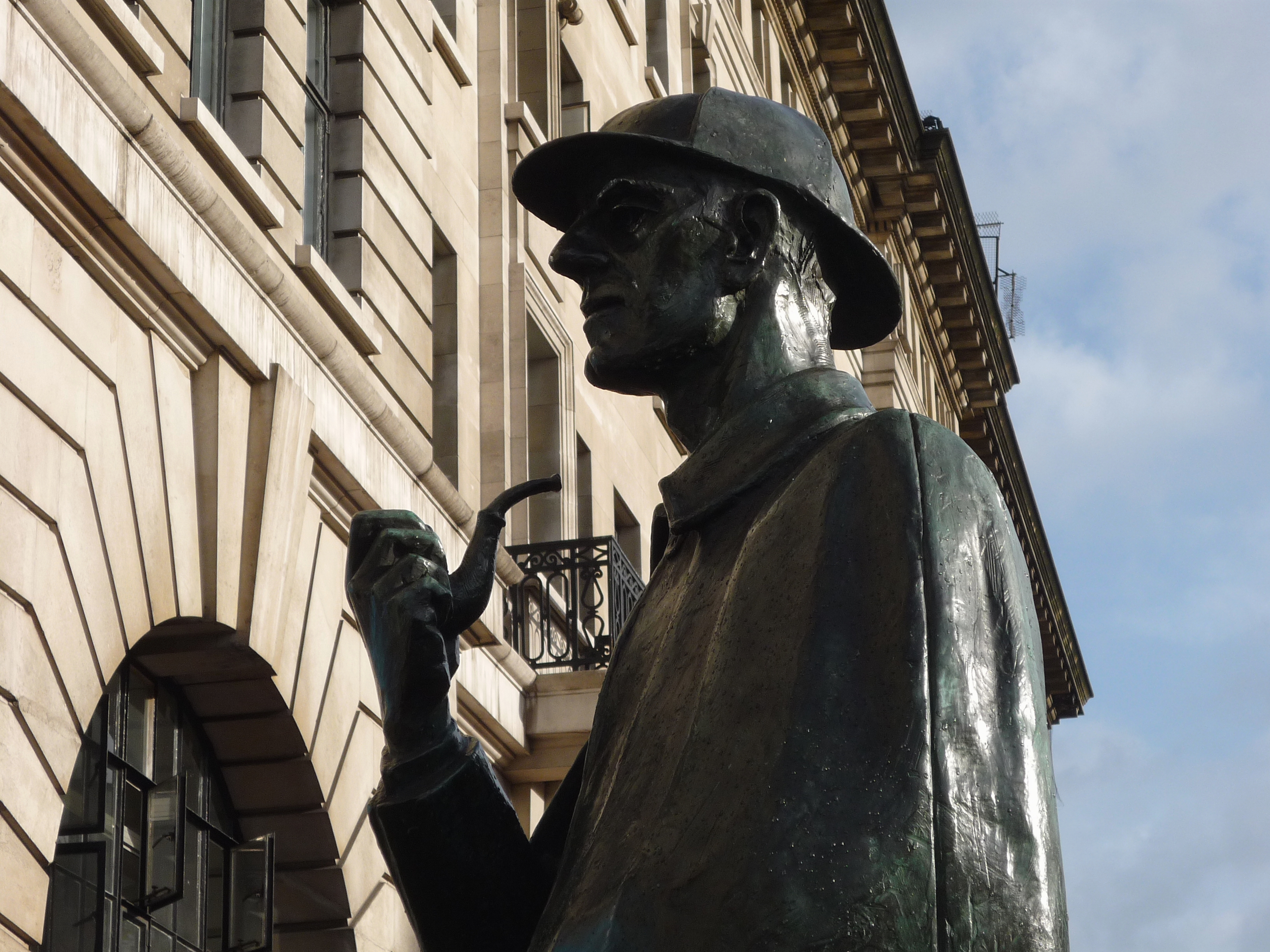
Sherlock Holmes statue in London (courtesy: Wikimedia Commons)
I read the adventures and further adventures of Sir Arthur Conan Doyle's most famous character when I was in elementary school. If I learned one thing from Sherlock Holmes it was to be observant. So when we lost three patients in two days, only one of which I expected to die, I wanted to know why. Often we do not have enough information to accurately diagnose our patients' diseases and causes of death are no different. These cases were no exception. One presented very late with miliary tuberculosis (pretty sure of that diagnosis based on the X-ray), one had terminal renal failure and heart failure, and another had passed out after drinking too much on Christmas and started complaining of back and abdominal pain. Disparate cases, to be sure. But all had received Ceftriaxone within 6 hrs of dying (for concurrent pneumonia, urinary tract infection, and febrile diarrhea in the setting of leukopenia, respectively).

Could the Ceftriaxone injections be implicated in the timing of these patient deaths? A bad batch? A problem of labelling in the factory? Some toxic transformation while in transit or sitting on our pharmacy shelves? The imagination can run wild, but we needed data. One cannot make bricks without clay.

At my hospital in California, I could talk to the pharmacy committee and we might send a sample to be confirmed in a reference lab with mass spectroscopy and other advanced chemistry. In a land where 90% of the population farms without tractors or plows, that won't work. What would Sherlock Holmes do?

We could inject a healthy volunteer with Ceftriaxone and watch what happens. I could never ask a patient or colleague to consent to this, given that there is a risk that the Ceftriaxone was contaminated with a fatal poison, so I would need to be the volunteer. But wait...could a goat stand in the place of the volunteer? I would ask Silas, our chaplain who is also a veterinarian and pig farmer.

An experiment must have documentation.
Silas recommended we choose a more diminutive species. Could we find some "cobayes" to use? I did not know that word in French, so I asked about rabbits while looking it up in my dictionary. We have some rabbits on campus. That would be OK, according to my friend Silas, but we could probably find some cobayes even in the community around Kibuye. Alors! I found that word in the dictionary: guinea pigs. We have guinea pigs on campus too. I would need the permission from some kids before using their pets as guinea pigs for a science experiment.

Our multi-talented chaplain, missionary kid, and guinea pig "volunteers."
Heroines #1: our team kids. With a healthy amount of trepidation, a surgeon's daughter agreed that she could furnish three guinea pigs for this experiment knowing that it could save patients' lives. This pre-adolescent girl already had internalized the central ethical tenet that allows me to support animal research for healthcare - human life, as bearing the image of God, is more precious than animal life.

Heroines #2: those guinea pigs. As I was talking with this heroine, we both realized the connection between Christmas and these research subjects. They were risking their lives to save others. It might be a stretch to say that the guinea pigs were willing to die to save others, but they were standing in the place of myself and my patients so that we would not be exposed to a certain risk.

In any case, I'm glad to report that all three guinea pigs came through the process fine and dandy. Eliminating the impossible, I'm concluding that these patients died of their diseases and not our treatments. Thanks guinea pigs! Thanks intrepid missionary kids! But most of all, thank you Jesus, for absorbing not only risk, but wrath rightly deserved, for me and so many of our patients and colleagues.
Alive and well after 100 mg/kg of Ceftriaxone. Yay for guinea pigs!