30.6.12

The Furlough 40

(from Eric McLaughlin)

I'm sure that you've heard of the Freshman 15, which is the well-known phenomenon where a freshman gains 15 pounds during the year.  When you've been through as many cycles of education as we have, this can really add up.  There is a corollary to this in missionary life:  The Furlough 40.  And I am coming close to this reality.

Some of you have never met me, but let me admit that I'm not the heftiest guy in the world.  And I never have been.  Prior to leaving the US, people would often look at me with evident fear that I was undernourished, but this was a purely American phenomenon, and I would try to reassure them that a BMI of 19 may be unusual in America, but it is still within the range of healthy.

Then I moved to Kenya and lost about 10 pounds, slowly over the course of two years.  It wasn't dramatic. I didn't have a parasite (that I knew of, though I might have skipped a deworming dose once), nor did I suffer from chronic GI issues (though we know several people who do).  And I had all the quantity of food that I wanted.  And yet I dropped a few pounds.  So did Rachel.  Only for me the result was a BMI of 17 and being clinically underweight (a bit) according to the malnutrition charts posted in our outpatient clinic.

Before
For those who don't know me, or can't imagine me losing weight, I'm posting a photo here of me around the time I left Kenya.  As you can see, the beard and the hair were getting a bit out of control, as well.

One of our American friends there, when someone told him that all the Kenyans thought I looked like Jesus, famously quipped: "Like Jesus?  Maybe Jesus after he'd been fasting 40 days and 40 nights!"  Thanks, Jim.

Then I come back to America.  I had been warned by John "The Beef" Cropsey that the metabolic effects of returning to the US cannot be underestimated.  He purportedly gained 6 pounds during a week in the US for his oral board exams.  I guess he ate a lot of Cheesecake Factory.

I don't think I've been doing anything differently, though I have noticed an exceptionally high number of good cooks in my life, recently.  And with all our time on the road, we do get to visit with people at restaurants a good bit.  And you know, ice cream really is a great food.

After
The upshot of this is that I have gained about 30 pounds since a year ago.  Here is the "after" photo.  As you can see, the hair and beard are still the same, but I've bulked up a bit.  

What have I learned from this?  I guess I've learned that when I eat less meat and very little processed foods (like we did in Kenya) and I walk everywhere I go, I become underweight.  So, I'm not really concerned about the unexpected gain now, since I'm pretty much guaranteed to lose it later.  I must be the only person to benefit from the American diet.  Please don't hate me.

27.6.12

Evacuated

By Jessica Cropsey

On Saturday, we took a family trip to the Focus on the Family Visitor's Center in Colorado Springs to visit Adventure in Odyssey.  Little did we know that the small plume of smoke we saw near Pikes Peak that afternoon as we exited the building would turn into something so big.

Those of you who follow the news probably have heard about the Waldo Canyon fire near Colorado Springs.  That small plume of smoke that we saw was the very beginnings of that fire and has turned into a massive, uncontrolled wildfire now on the outskirts of Colorado Springs (population 400,000) and the Air Force Academy ($$$priceless$$$).  High winds and very dry temperatures have exacerbated the fire, causing it to spread dramatically in the last 24 hours.  The fire chief has called it "a fire of epic proportions."  Well over 32,000 residents have evacuated the area.  Now we are among those growing numbers.  Just this afternoon we were asked to leave MTI (Mission Training International).  We are now refugees at Vista Grande Baptist Church.  

Source:  BBC News

Our crew is situated in two of the rooms in the children's wing.  Elise & Micah are loving the new array of toys.  We have our own bathroom (complete with a child-size toilet & sink).  The kids have little cots to sleep on (off to the left) and the congregation of Vista Grande Baptist gathered enough air mattresses for all of the adults and older kids.  What a blessing!  Showers might be a little hard to come by, but we're all missionaries, right?      


We are planning to continue our classes as scheduled tomorrow, using the facilities at the church.  Our scheduled topic for next Friday was "Transition".  I guess God decided to give us all some real life experience in this area a little ahead of schedule.

We are very thankful for the organization of our firefighters and emergency response personnel, and for the vast resources available to meet the needs of those who have been displaced.  A similar scenario in the developing world would likely have a very different outcome.

Please pray for the 800-1,000 firefighters who are working incredibly hard to extinguish this raging fire and pray for rain that this land so desperately needs.

26.6.12

Need

(From Alyssa Pfister)

Sometimes, like Heather said in a previous blog post, I have moments of suddenly remembering why I'm doing what I'm doing.  This time of preparation is definitely a paradox - bittersweet. Part of our calling to serve the people of Burundi in word and deed involves preparing diligently - learning the languages, raising the funds, studying tropical medicine, attending missionary training courses, & sharing our vision with others. And there are sweet blessings that accompany those preparations such as living closer to family during this time, learning interesting and valuable information, & being encouraged through the prayers and support of so many. But sometimes, like when reading the below blog, I wish we could be back in Africa sooner. This blog was written by friends and colleagues of ours with World Harvest who are working in rural Uganda. They are currently struggling with both measles and cholera outbreaks in addition to underlying severe malnutrition for many of these patients. Read the blog here. Anyone available to help with these medical and water needs?


23.6.12

Going Back to (Tropical Medicine) School

(from Eric McLaughlin)

The teacher has become the student, that the student might become the teacher.

Rounds at Tenwek often had a list of patients and diagnoses like this:

  1. HIV with tuberculosis meningitis
  2. HIV with cryptococcal meningitis
  3. Severe anemia (Hb 3) from bleeding esophageal cancer
  4. Complete dysphagia from esophageal cancer
  5. Suicide attempt from organophosphate poisoning
  6. HIV with unremitting gastroenteritis
  7. HIV with respiratory distress: Pneumonia vs TB vs PCP
  8. Renal failure and no idea why
  9. Bacterial meningitis
  10. TB pericarditis with bilateral TB pleural effusions
  11. HIV with Kaposi's sarcoma and HIVAN, etc.
And if it was Peds, there was a whole other realm to deal with: worms, malnutrition, tetanus, rabies, malaria, typhoid...

If there was a visiting US doctor, sometimes after rounds they would ask, "How much of what you do every day did you know how to do before you came to Kenya?"  It was a good question, and I can only guess.  But my guess is about 30%.  The other 70% I had learned since coming to Kenya from books, the internet, veteran missionary doctors, and Kenyan colleagues.

The point is that it is very different.  And though I definitely feel that we all gained some good ground on tropical medicine while we were in Kenya, we were often learning on the ground, i.e. just learning it the way we did it at Tenwek, or the only way we could do it with our resource limitations.


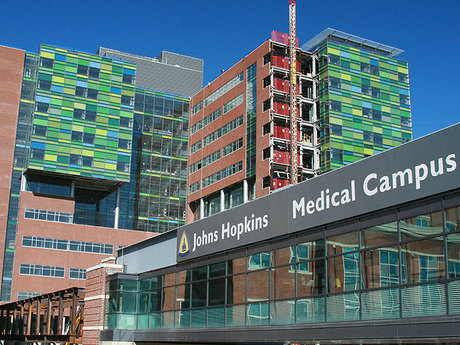
Then we commit to going to Burundi, to serve as clinical faculty for the medical school at Hope Africa University.  This means that we will be primary educators for Burundian doctors, including tropical topics.  This led us as a team to feel that some of us needed more formal tropical medicine training.  So, Alyssa (who wrote about her experience in Peru earlier this year) and I were delegated, and thus our family relocated again to Baltimore, MD, last week, for me to start the Summer Institute of Tropical Medicine at Johns Hopkins University.

It is a 4-week program, and I just took my first exam (the first one for me in almost 3 years, since my board certification) yesterday.  It is intensive, with 8 hours of lecture everyday.  There are 29 students from about a dozen countries, including three Kenyan ladies, so that is fun.  The lecturers thus far have been quite impressive, and I have loved the chance to learn from them.

Over two years in Kenya, we would encounter the same clinical questions again and again:  How do HIV meds need to change if treatment for TB is also required?  Are traditional herbs known to be a cause of liver damage or failure?  What is the best way to approach persistent diarrhea in an HIV patient?  We would toss these questions back and forth and search the literature, but overall usually continued in the dark.  It is truly one of the challenges of the medicine we do.  

However, now I have had the chance to pick the brains of world experts on these questions, and it's really an exciting experience.  This is not only gratifying, but will hopefully result in better care for the years of patients I am likely to encounter with these problems, as well as for all the patients that our future Burundian students and residents will treat, all across the country.

18.6.12

COTW: Packer's Syndrome


 By Jason

 This is a patient from last week - an otherwise healthy 35-year-old male who presented with the condition pictured below...


He described a relatively acute onset of the symptoms over the past week or so.  The bleeding of his fingers seems come about when he is packing crates such as the one pictured here:


Alas, this is actually my hand.  We are busy packing crates to put on the shipping container to ship to Burundi.  In an effort to use the space to its maximum potential (weight is not really a factor for shipping containers) I find myself stuffing clothes and other things down the sides of the crate and in small cracks, and it hasn't been so good for my hands.  I should have followed John's idea, who is using a screwdriver to stuff as much as he can into the crates.

 My brother was here this weekend and we took the first load of packed crates (22 crates at 250-450 lbs each) to the shipping container.  It required some ingenuity to  maneuver such heavy crates.  Fortunately my brother is an engineer.  We used a lot of levers and ramps and a dolly to budge these boxes.


Here is a picture of the current state of the container...a partial layer of these crates on the floor, lots of medical equipment to be organized and packed, and lots of room to go.


I guess as a surgeon, I should name the disease after myself instead of "Packer's Syndrome"...feel free to refer to this condition as "The Fader Phenomenon."

15.6.12

Prayers

You might have noticed the blog hasn't been updated quite as much this past month or two.  This is due in large part to the fact that we McCropders are now spread out over four time zones, evidence of our increasingly mobile lifestyle.  We skyped last week and teammates were in California, Colorado, Alabama, Minnesota, and Michigan.  Yikes!  With all this travel and transition in mind, please keep us in your prayers.  Specifically...

Safe travels for all McCropders, travelling from sea to shining sea
The Faders, as they pack up their house and move out next week
The Cropseys, as they attend SPLICE/PILAT (special missions training classes) in Colorado and all five family members share one room
Sarah, as she also attends SPLICE and PILAT
The McLaughlins, as Eric begins a tropical medicine training course in Baltimore next week
Alyssa, as she attends her sister's upcoming wedding and enjoys family fellowship
Carlan, as he finishes his last two weeks of ER residency with a lot of night shifts
Wisdom for all McCropders as we work to plan and pack our stuff to ship to Burundi
For our families as the long period of transition continues, and stability for our children
The goodbyes that we are already beginning to say

And thanksgiving, that God HAS provided and will CONTINUE to provide everything we need.  He is good.  Thank you for your prayers.

8.6.12

How To Live Out Of Your Car

(from Eric McLaughlin, in an attempt at a little something different...)

I wish I knew how to live out of my car.  I mean how to do it right.  Because I'm sure there are some things we could do way better, and we learn as we go.  We shared some of these thoughts before.

Nevertheless we are going on 9 months now of living out of our car.  Thankfully, due to extremely gracious hospitality, we have never actually spent the night in our car, so really I mean that we have carried with us everything we "need" for the last nine months.

This kind of portable living is generally a feature true of missionary life.  We're not always on the go.  In fact, sometimes, we wouldn't leave our home in Kenya (even by so much as a mile) for a couple months at a time.  That idea alone would have given me cabin fever before moving there, but travel can be pretty exhausting in Kenya, so we didn't really mind.  

Despite this, we had limited luggage to take to Kenya, we have limitations now in our car.  And we will go through this process again moving to France in a couple months, and again later in Burundi.  And through this, we have found a few key items, and thought that they might be worth sharing.


 1.  The Dora Bed.  One of our friends in Kenya recommended that we travel with our own pillows, so that wherever we were, we would be laying our heads on our own pillows.  We didn't do that, and by now, I think our own pillows would be pretty worn and ragged.  However, the first week we were home, we bought this Dora bed for $1 at a garage sale, and it has been Maggie's bed ever since.  We have placed this is innumerable locations, oftentimes on top of another bed, but it has provided Maggie with a stable place to sleep.  And it packs down super small, so it doesn't take up much space.


2.  The High Chair.  We bought this when Maggie was six months old, and we were living out on the Navajo for a couple months, before moving to Kenya.  We were already living out of our car, and when Rachel said she had purchased a "high chair", I had my doubts as to the feasibility of traveling with this.  But it worked awesome.  It's lightweight, it attaches to any chair, and it's easy to wash.  It packs down small, and we took it to Kenya, and now Ben is currently sitting in it, having a snack next to me.  We visit with a lot of people who don't necessarily have a reason to own a high chair, so this greatly improves mealtimes for everyone, and is well worth the space in the car.


3. and 4.  The Expandable File Folder and the Umbrella Stroller. When we were moving out of our house in Michigan in 2009, we had 2 file drawers full of papers.  They all seemed important, and we wondered what we were going to do.  We purchased this little blue file folder, which has about 15-20 pockets, and having been carting it around ever since, keeping track of all the important documents that we need in our lives.  The Umbrella Stroller behind may be out of style, but it takes up little space, it costs $12, and no one ever raises an eyebrow when you want to gate-check it at an airport.  Pure Gold.


5.  Lastly, any discussion on space saving wouldn't be complete without a nod to the digital world.  Our little disc wallet carries over 100 dvds.  Our iPod has over 16 days of music (and backs up our laptop), and the kindle has over 70 books, and can carry a lot more.  We don't need those things, but they sure are nice to have along, and our movies and music have been loaned out to more of our fellow travelers than I can remember.

Any addenda from the travel-savvy?

4.6.12

Knowing Your Audience

(from Eric McLaughlin)


We have lost count of how many opportunities we have been given to share about our lives in Kenya and our plans in Burundi.  It's something over thirty.  And they have never been the same.  We have talked to first-graders and we have given grand rounds to groups of doctors.  High-schoolers and veteran missionaries.  All parts of the country.


We had a great time last night, as Rachel and I got to share for the vespers service at my grandparents retirement community in Golden Valley, Minnesota (pictured on the right).


It was special for several reasons.  First, they had a beautiful grand piano there, so I begged the opportunity to lead everyone in a hymn to start.  Second, they probably get the prize for most enthusiastic reception (we talked with many people for a long time afterwards).  Third, several there were retired African missionaries with the covenant church, some of them medical, and some that even worked in Congo with one of our Tenwek neighbors.

The unique nature of the group last night got me thinking about our current role as "witnesses".  We have news to share.  At best, this is a chance to bridge the gap between people in the US who really want to connect with African issues, and those same issues which, try as you might, still can seem too distant and remote to get close to your heart.  At worst, we are talking with people who don't want to care.

But there are a million variations between these two extremes, and part of our challenge is figuring out where someone (or some group) is, and then trying to strike the right chord to meet them where they are.  Perhaps this is best illustrated by what NOT to do.  Examples:

Other person:  "Wow, I'm just starting to realize how much need is out there, and that I should do something about it."
Me:  "Here is a copy of When Helping Hurts."  (though a great book and highly useful for other people)

High school junior:  "You mean that, for lack of doctors and simple things like a blood transfusion, people are dying?"
Me:  "Yeah, we would routinely see people with Hemoglobins in the 2's, and a couple times in the 1s.  The amount of heme disease there is really incredible.  It would be fascinating to know if anyone has done the studies to see what the underlying cause is."  (though medical folks really engage some of these details)

Another person:  "Really, you had to wash all your vegetables in bleach water before eating them?  What was that like?"
Me:  "That's nothing!  Let me tell you about the real challenges of coping with losing patients and the finer points of trying to educate across cultures."

And then there are the times like last night, where the gap is surprisingly minimal, and the first question is "Do you know John and Linda Spriegel?  We worked with them at a bush hospital in the Congo."  Why yes, we do.  We worked with them everyday and lived about 70 yards from them.  Wow. =)

Overall, it's an enjoyable challenge, because the moments of connection are evident, and are a reward in themselves.  We care greatly about the things we are doing and sharing about.  This doesn't mean that everyone has to share all our enthusiasm, but to see the light come on in someone's eyes is a beautiful thing that we get to be a part of.  Maybe you, the reader, are one of those people.  You have been a blessing to us.

25.5.12

SPLICE: Paradox

(From Alyssa)
Given everyone's different timing considerations during this transition year, we're taking the SPLICE (Spiritual, Personal, Lifestyles, Interpersonal, Cultural, Endurance, Enjoyment) missionary training course at separate sessions offered throughout the year. We look forward to reuniting in France for language school in August and discussing our observations, reflections, & experiences with our shared SPLICE language. I blogged about the language acquisition portion of the training here and I'm sure you'll hear more about that as other teammates complete that course and we all put our phonics and language acquisition techniques to practice in France and Burundi.

During this first week of SPLICE, the message highlighted for most of my fellow missionaries here this session has been "Paradox." "It was the best of times! It was the worst of times!" Or, as they explain this to the missionary kids: a "pair of ducks" ("yuck duck and yeah duck"). This is the tension we live in as we look to our unknown future.  We look forward to the anticipated joys of our work in Burundi and yet we mourn aspects of distance from family, cross cultural adjustments, etc. Lots of yeah ducks and lots of yuck ducks.

"Allowing the seemingly contradictory statements to lie side by side without weakening one statement is a goal of SPLICE."

So yesterday morning, we participated in this exercise (illustrated above) with both adult and kid SPLICE participants. The tension on the strings included reality vs. expectations, joys vs. sorrows (yeah and yuck ducks), others' expectations, & intensity. The other interesting addition was a jacket to insulate the person from the sorrows (unfortunately also insulating against feeling some of the joys).

Following this discussion, the children all went on a field trip to Garden of the gods.
Garden of the gods (pics taken on my recent visit there)

They enjoyed their morning hiking there on a beautiful day and then stopped for a picnic lunch. As they finished eating and the kids began running and playing in the area again, suddenly a gust of wind blew a large dead tree down on the children.

One child was pinned under the tree. Another sustained whiplash and head/neck lacerations as the tree brushed his head when it fell. Quite a few kids were scraped by branches.

A trauma nurse who "happened" to be walking by was on the scene within seconds. The teenagers and childcare staff quickly moved the tree off the 11 year old boy. Ambulances, park rangers, police began to arrive. The two boys mentioned above were taken to the hospital in an ambulance and their parents met them there. The other children were brought back to MTI and underwent an extended debriefing time with their parents and SPLICE teachers drawing pictures about their experiences and discussing their fears.

After CT scans, x rays, and evaluations in the emergency department, both boys were determined to be ok with only minor injuries and were released home.

We praised the Lord for His protection of all the children and spent significant time in worship today as a community.

Amazingly when the family of the 6 year old boy arrived at the hospital and found their son lying on a stretcher in a neck brace, he told them immediately, "Mom and Dad, I had three yeah ducks today and one yuck duck. But the yuck duck was a really big one!" His "yeah ducks" were hiking at Garden of the gods, that his team won the game they played, and that he got to ride in an ambulance. :) He didn't like the neck brace, and his mom explained that it was necessary for his protection until they knew if his neck was ok. His response, "Yeah, it's a paradox!" Pretty impressive understanding and application for a 6 year old! Hopefully this experience will continue to encourage his faith as his family heads to a difficult mission field.

One funny moment of the traumatic events of yesterday was when the police started asking the kids their addresses. They didn't know what they were. No, it wasn't concussion, just a bunch of homeless missionary kids in transition between worlds. Another paradox we were able to laugh about as a community!

We're thankful for this training beneficial for kids and adults and we appreciate your continued prayers for our McCropder team as we live with paradox.

23.5.12

Another McCropder!

By Jessica Cropsey

Two and a half months ago we heard about a teacher who was looking for a long-term placement with a team.  She initially heard about the McCropders through Jason Fader's mom and another Post-Resident physician at Kijabe Hospital in Kenya.  She got in touch with our team and after several phone conversations, a skype meeting, face-to-face meetings with various McCropder team members, and a site visit to Burundi, she has decided to join us!  It is my privilege to introduce you to our newest team member...

Sarah Crockett grew up in the Chicago area and graduated from Bethel College in Indiana with a degree in elementary education.  She completed her student teaching at Rift Valley Academy (RVA) in Kenya and stayed on for three more years after that.  We are super excited about having Sarah join us to take the lead in educating our children (7 under the age of 8...for now).

Here's a portion of her reflections after her site visit to Burundi in April:
One of my prayers as I visited Burundi and in particular Kibuye, was that God would give me a passion and vision for the medical training & care that the McCropder team will be delivering. Being non-medical it was important to me to gain a greater sense of how I fit into the vision of the McCropder team. Through the tour of Kibuye Hope Hospital and conversations with medical students and on site missionaries I saw the great need for the McCropders giftings as a team and the desire of Burundians to openly welcome the McCropder team. I found my heart excited to better understand the medical world and support the McCropder doctors. I am always amazed at the gift God gives in relationships and this was abundantly true as I visited with a few HAU students. Hearing their stories and dreams for future ministry as doctors offering healing and hope to people in great need gripped my heart.

We are so thankful for the way that God orchestrated this addition to our team.  Before we had much interaction with Sarah, she wrote in her application that she loved ultimate frisbee and Settlers of Catan.  Little did she know that would seal the deal!

Sarah is committing to our team on a long-term basis, so she will be joining us in Albertville, France for language school.  Everything has happened incredibly quickly, so please keep Sarah in your prayers as she plans and prepares for things that the rest of us have been thinking about and planning for a long time (French visa, packing the container, school supplies, curriculum choices, etc.).    


In case you haven't noticed, her last name fits perfectly.  We, the Cropseys, are happy to share our "CRO" with her!  Of course, we would have warmly welcomed her anyways, but for now the McCropder name lives on.  

P.S.  Due to the number of children on our team, we are still hoping to recruit another teacher, so keep your ears peeled and spread the word!  Someone who could commit for 1-2 years would still be most welcome.