26.4.20

Of wooden planks and boiled eggs

(By Jess Lembelembe)

Along with the rest of the team, I have enjoyed seeing incremental progress on the several building projects going on these days in Kibuye - the pediatric ward, the octoplex residence, maternity ward renovation. Since I happen to know the construction manager, I like asking for special guided tours when the crew has already gone home, so I can ask all my curiosity questions:
"How long does the concrete stay in the wooden forms before you remove the wood?"
"What will this room be used for when it is finished?"
 "Where will the stairs be?"
"Are you sure this platform is strong enough to hold me?"
One of the most amazing things to my untrained eye is to see how rough unfinished planks of wood, crooked pieces of timber and simple string are useful for producing perfectly flat and level concrete beams and columns. I comment on it almost every time I'm on site. Hopefully the photos below give you a sense of what I'm talking about.

When a pole is too short, the solution is simple: wedge a few piece of wood underneath.

And when the pole reach the top, they are attached to the bigger frame with random bits of wood, too.

But standing back, the point becomes clear... All those unfinished poles line up to support a flat concrete slab.

It isn't only wooden poles that will hold up the slab, because these wooden forms were already used to pour concrete columns.

I started to wonder why these building techniques fascinated me so much, and I realized these very imperfect bits of wood held a lesson for me.

I am a perfectionist, and I find it impossible to leave a task until it is completed to meet my (high-ish) standard of excellence. When I am unsure of my ability to complete a big, important task, I wish there was someone more qualified available to do it as it "should" be done. At times it is hard to believe that God not only can, but actually prefers, to use me in my weakness to be a part of his beautiful kingdom. My pride would prefer that I be called upon only in my moments of (perceived) strength.

In a team of committed and competent people, I know I am not the only one who finds it uncomfortable to live out of my weakness rather than strength. Whether it is the person preparing a sermon in a second language or a doctor who realizes their skills and strength alone are not capable of meeting the medical needs of all those who fill the hospital beds, I doubt many of us make it through a week without feeling about as impressive as a splintered bit of wood at least once.

A week ago I was walking around on top of the wooden frame that all those concrete columns and skinny wooden poles are holding up. Looking down from above, I saw just how many pieces are needed to build the platform, all of varying lengths and widths. But they are angled and attached with precision, and leveled out using string to ensure that they will eventually produce a straight beam and flat upper floor.


 When this complex arrangement is finally covered over with boards, the purpose becomes more clear. This structure is going to support a strong concrete slab in just a couple of days.


After all, the slab on the ground floor started with wooden forms, too, and the photo below shows just how pristine the result was.


God's Word reminds us that we are actually a body made up of many parts, and he makes us all fit together to cooperate and serve one another with the gifts he has placed in each of us. There is no need to look down on the parts that are less impressive, since they still are valuable in performing their particular role.

I recently volunteered to serve as one of those "modest" parts in the complex body that is the feeding program for malnourished children and their mothers. My job: boil 250 eggs to be distributed each Friday morning to the mothers. When I was in the middle of the actual boiling task, one question rose to the surface: This is a mundane job; should or could someone else do this? I'm happy to help, but if the rest of the food (specifically Busoma, a porridge mix made from several nutritious grains) that is given to these mothers is produced at the Busoma factory, shouldn't the staff there just take care of preparing the eggs, too?

The next day, when Matt and I carried all the eggs up to the Busoma staff in time for distribution, I caught a glimpse of the bigger operation that is actually going on. Staff at the factory were sifting grain to make more porridge mix, staff at the gate were ready to distribute it to the mothers enrolled in the program, who were already lined up outside. Others are responsible for procuring all the grain and even the eggs that I had boiled. Come to think of it, I hadn't even been the one to boil all these eggs. Acheri, the kitchen helper who works at our house, did most of the boiling. And there aren't electric hotplates or stoves just sitting around the hospital or in any of the surrounding homes. Entrusting Acheri with this small, but important work, and making my kitchen available, is actually contributing to the bigger ministry of offering hope and health to many families struggling with malnutrition.

Sometimes we can only see our crooked edges and rough surfaces and wonder what they are good for. Thankfully God has a bigger perspective, and He is actively working out a masterpiece we can only partially comprehend. When we do get a glimpse, the views are never short of beautiful.

Many of you reading these posts also play a significant supporting role in the mission of Kibuye Hope Hospital from a distance, and we are grateful for you. It is a privilege to be a part of this greater Body, working together for transformation in Burundi.

15.4.20

Easter Reflections

by Rachel


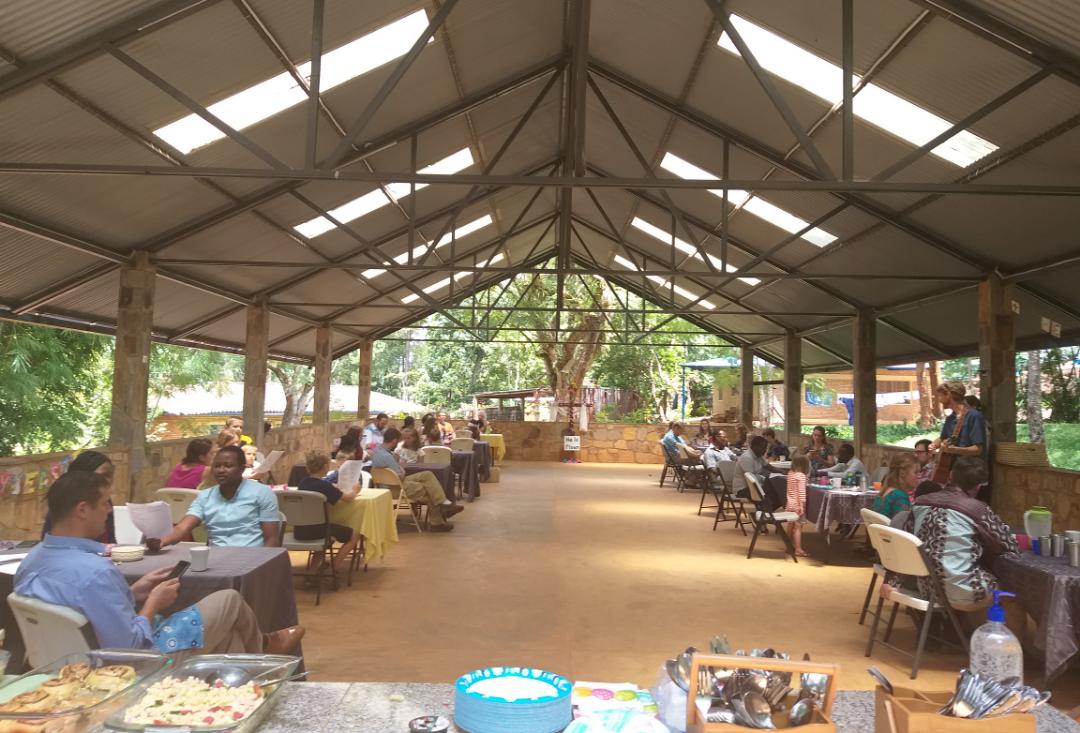
As a surprise to no one, anywhere in the world, Easter was a bit different this year.  Our team has struggled with the implications of COVID and potential problems, held in tension with the fact that Burundi has recorded only 5 cases.  We are trying to find the right balance of wisdom in preparing and protecting ourselves and our country, while still finding a way to live and work in our very tight-knit community.  There was a lot of discussion leading up to Easter.  Traditionally, it's been a day of celebrating, perhaps sharing a song in a packed out church, feasting at a brunch potluck together, kids hunting easter eggs and candy.  This year...we try to avoid crowds.  We try not to share food.  There are no visitors to bring candy in special suitcases.  But in the end, we decided that gathering together was important enough to our mental health and the witness our intertwined lives provides, to continue with at least some of these traditions.

The team did decide to gather for a meal.  We set up tables 6 feet apart and did family groupings.  Only a few people served the meal, wearing gloves and distributing food so people didn't have to touch utensils multiple times.  But we showed up.  Someone did in fact pull out a sack of candy for the kids to find!  And we started with "A Liturgy for Feasting."  This is something we've classically done on Thanksgiving, but it seemed no less appropriate for Easter Sunday in the COVID era.  I already shared this in my Thanksgiving blog, but it bears repeating:

To gather joyfully is indeed a serious affair, for feasting and all its enjoyments gratefully taken are, at their heart, acts of war.
In celebrating this feast we declare that evil and death, suffering and loss, sorrow and tears, will not have the final word.


We ate, and we prayed, and we sang praises.  Later that afternoon, Serge had prepared a special Easter service online for all of their missionaries, and our families were able to watch a message of hope and encouragement.  It was a good day.  It was a very anticipated day and one that was full of a different meaning than in years past, as the world struggles along and death seems very near.  It's been a hard season here at Kibuye, a season of dying and loss, and the resurrection has never seemed so poignant nor applicable...nor longed for.

And yet now, after the fact, it seems that the hope and joy that I wanted Easter to bring....are hard to come by.  If I'm honest, I hoped that Easter Sunday would magically usher in a new season here on earth, with healing from viruses, world peace, and an end to goodbyes.  A personal sense of peace and calm.  But it didn't.  The problems of the world, the problems of my heart, are all still the same as they were on Saturday.  The difference is, if I can cling to it, that the problems are faced with a different viewpoint.  If I truly believe, as I do, that Jesus Christ conquered death on that Easter Sunday so many years ago, then this world is not my home.  There is more to come.  These "light and momentary troubles are achieving for us an eternal glory that far outweighs them all."  My heart is fickle, and I often choose to focus on my temporary afflictions instead of my eternal glory.  But I hope and pray that this Easter season will serve as a reminder to me to fix my eyes on Jesus and the hope to come.  I pray that for us all.

7.4.20

Grieving Losses & Building a RAFT

by Jess Cropsey

In recent weeks, people all over the world have grieved uncommon losses of many kinds -- the ability to go to work/school, independence, senior year memories, vacation plans, weddings, feeling of safety, etc. And of course there are those who have lost their jobs or even their own lives because of this pandemic.

While the situation in Burundi is different in certain ways for the time being, our lives also have been upended. As we anticipate the departure of several families and navigate our new way of life in this covid-era, we decided to spend some time with the kids reviewing some common themes in their lives -- loss, grief, and transition. So this is what our school day looked like at Kibuye Hope Academy on Monday ...


We began by reading the first chapter of B At Home in which 10-year old Emma's world is rocked when her parents tell her they're moving...again. It's a chapter book that is highly relatable to children who have experienced a lot of moves, particularly while overseas.


Next, we talked about some of the recent and anticipated losses that we've experienced / will experience as a community and the kids took some time to write about losses that they're feeling as individuals. Regardless of the perceived magnitude of the loss, we've found it important to name them and not brush them under the carpet as "unimportant" or "no big deal".


Using many of the ideas from Misunderstood by Tanya Crossman, we subsequently discussed what grief is, the different ways that people grieve (pre- vs. post- grievers), and why it's important to do it well.


Finally, we walked kids through the RAFT process, which I would highly recommend for anyone (not just overseas workers) facing a big transition. We were introduced to this idea at cross-cultural training and we've found it helpful to walk through together as a family before any move. This time, we had the kids actually build their RAFT using craft sticks, with the name of the step on one side and their answers to the questions on the back. We also added Scripture verses on the support craft sticks on the bottom of the raft.

R (Reconciliation) -- Are there any broken relationships that need to be mended?
A (Affirmation) -- Is there someone who has been particularly important in your life? Make a plan for what you want to tell them and when/how you'll do it.
F (Farewell) -- What special people, places, pets, or other things have been meaningful to you? Make a plan to say good-bye to them.
T (Think Destination) -- Think about where you'll be next. What are your expectations? How will things be similar or different? What are you excited or anxious about?


At the end of the morning, the kids had time to make cards for others as part of the "Affirmation" step. Here's a super creative one that I got from Elise. (I'm pretty sure the fashionable fry only applies when I'm borrowing my mom's clothes.)


You are all on our hearts and minds as you grieve your own losses in this unique period of world history. Please feel free to comment and let us know how we can be praying for you.

"My flesh and my heart may fail, but God is the strength of my heart and my portion forever." 
~Psalm 73:26

4.4.20

Lamenting and Rejoicing at the Same Time

(from Eric)

We are living in a time of loss.  And so are you, fellow inhabitant of planet Earth.  This season is not what anyone predicted.  We cannot go where we thought we could go.  We cannot do what we thought we were doing.  We cannot be with those whom we thought to spend time.  We do not know when things will change, which makes any significant planning nearly impossible.  Early February has this amazing nostalgia.  The glory of that ordinary life - we knew it not.  May we know it better when it returns.

Watching people all over the world grapple with this time of loss has shown me two seemingly contradictory responses:

First, there is an increased call for the importance of lament.  Articles such as NT Wright's and different books (including my own) have been sources of resonance for a lot of people.  Lament is indeed a gift to us in times like our own.  We don't have answers, and we don't know yet when answers will be forthcoming.  Our normal means of decision-making and anxiety-mitigation have been stripped from us by the utterly unprecedented nature of the global COVID-19 pandemic.  We don't know what to do.

Here, lament gives us the words and even the emotional stance that we need.  We cry out to God.  We pour out our complaint.  We ask "How long?" as more than a rhetorical question.  We don't understand, but can at least know to whom our complaint is rightly addressed.  We do better to take the ugliest thought to God than the most cleaned-up thought anywhere else.  "We don't know what to do, but our eyes are on you."  (2 Chronicles 20:12)

The second response is one of celebration and beauty.  As our normal life becomes restricted, and in many places slows down, there is a need to find some form of celebration.  People write notes to each other.  You may have seem more longtime friends on Zoom in the past couple of weeks than you have in years.  Yesterday, my wife walked through our house loudly singing Les Miserables tunes ("One day more!") and the kids joined in.  The joy and the beauty are a defiance of the fear and the darkness, and this is as it should be.

I have loved watching the art and the music that Covid sequestration has already birthed.  My med school classmates are posting brilliant dual-piano pieces that they are playing together despite being a time zone apart.  Our team intern's watercolors of a beautiful JRR Tolkien quote are circulating on social media.  I can't remember when the beauty of American spring was so celebrated in photos.  The human creative spirit inside all of us, which is part of humanity's role as image bearers of a creative God, has hardly ever been so evident.  We need this.

So we find that we need to lament this loss.  And we find that we need to fill the void of this loss with a celebration of beauty.  And it feels impossible to do both of these together.  Give me one or the other, and some kind of path is laid before me.  But both?  I can feel my feet sticking to the ground.

***

Jerry Sittser is a religion professor at Whitworth University in Washington state.  He was driving home late one night in 1991 with his family, when they were hit head-on by a drunk driver.  His mother, his wife, and his daughter were all killed that day.  Three years later, he wrote a beautiful and haunting book called A Grace Disguised, where he says this:

"Sorrow is noble and gracious.  It enlarges the soul until the soul is capable of mourning and rejoicing simultaneously, of feeling the world's pain and hoping for the world's healing at the same time."

I have found this idea of sorrow widening our souls very compelling.  The pain and the mourning don't disappear, but they cease to cancel out or crowd out the joy and the beauty.

Is this even possible?  Well, I think you'd have to suffer greatly yourself to really know the truth.  However, as a doctor in Africa for ten years that has walked daily in an environment of ongoing loss, I would say yes with whatever authority that is my due.

We lament.  We rejoice.  Doing this things together may seem impossible, but it is rather as it should be.

Psalm 126 is a compact manifestation of this:

"When the Lord restored the fortunes of Zion, we were like those who dream.  Then our mouth was filled with laughter, and our tongue with shouts of joy; then they said among the nations, "The Lord has done great things for them." The Lord has done great things for us; we are glad."

Rachel and I used this first half for our wedding.  Now note the sudden transition to the second half:

"Restore our fortunes, O Lord, like streams in the (desert) Negeb!  Those who sow in tears shall reap with shouts of joy!  He who goes out weeping, bearing the seed for sowing, shall come home with shouts of joy, bringing his sheaves with him."

We did not use the second half for our wedding.  Is the psalmist rejoicing or weeping?  He is doing both, and the result is hope.  Once this is seen, it seems that it's all over the Bible, perhaps mostly in the Psalms, though the very person of Jesus exhibits this creative tension as well.

Where is all this loss leading us?  By God's grace, may it be to a larger heart where we are able to feel the world's pain and hope for the world's healing at the same time.

Better to give up my quest for control and live in hope.  -Jerry Sittser

29.3.20

Isolation and the Gospel

(from Lindsay)

Over a ten day period and thanks to a low-grade fever in the middle of a pandemic, I have had the opportunity to dwell on the question: What does the gospel have to do with isolation? I grew up as a pastor’s daughter. As an adult, I’ve been a part of faculties at Christian schools and missionary teams. The gospel in isolation isn’t something I’ve considered.

For many, these times are marked by fear, and there are plenty of devotionals online telling us why we shouldn’t fear (trust me, I had plenty of time to read them). I don’t disagree with most of these reflections. It is true, after all, I am less afraid when my eyes are on Jesus. Often, what I hear in these devotionals, however, - though I am sure it is not the intention - is this: people who are strong in faith won’t fear. My brain instantly interprets that and applies it: when I feel fear, my faith is weak, unworthy. Usually, I go on from there to inflicting thirty lashings, punishing myself for all that I and my faith are not. Sound familiar? I don’t think I’m alone in this reaction.

In this time of isolation, I’ve learned to hear Jesus say, “Come unto me all who are weary and burdened, and I will give you rest.” Isolation reminded me that God sent His Son to save sinners, that in fact He loved me while I was still a sinner. It reminded me that when I feel afraid, Jesus doesn’t say, “You fool, what is your problem? Buck up!” Instead, He reaches down and pulls me up just like He did when Peter sank beneath the waves. Isolation reminded me that it isn’t bravery, productivity, steadiness of heart that saves. It is Jesus. Truly, “In Christ alone my Hope is found.” It is only in Him that I find my all in all. I am certain that, “This is all my hope and peace, nothing but the blood of Jesus.”

During Lent, our family has been reading (now from two different rooms of the house) the devotions published by Biola University. In one write up, we were told that, “Peter reminds us to view our present circumstances in light of eternity. It’s so easy to be weighed down by our present concerns, problems, and cares, which are very real and very weighty. But Peter reminds us that these last for ‘a little while’ in comparison to the eternal reality to which we have been called and in which God will ‘perfect, confirm, strengthen and establish’ his children of faith. If we chose to focus on the present sufferings alone, we will find ourselves in the posture of ‘inconstancy’… If we can view our present questions and concerns in light of this eternal promise, we can stand in the posture of ‘fortitude'…It is not a self-induced fortitude—it comes as we stand in the power of the God who raised Christ from the dead.”

When we lack fortitude, the gospel doesn’t come to us and say, “Stop it. You shouldn’t feel that way. Why aren’t you better than this?” It tells us that the “Lamb is both provider and provision, fulsome in both suffering and joy, founder and perfecter, forerunner in the race and the one to whom the company of runners look. Rich or poor, healthy or sick, alone at home or in company, you have a race to run, and you can only endure by means of the Lamb’s provision and not your own.” The gospel doesn’t condemn us for our weakness, it reminds us of our Strength. 


Faith in that Lamb, even “faith as small as a mustard seed" is enough. I don’t have to add to that traits like bravery, and I don’t have to feel ashamed when I feel fear. It is not a sign that my faith has fallen to pieces. Jesus finished work on the cross saved me from my fear and lack of bravery. In the quietness of isolation, I was able to hear the voice of Jesus say, “Your strength indeed is small, Child of weakness, watch and pray. Find in me your all in all.”

23.3.20

When the Hits Keep Coming: Psalm 77 and Covid-19

(from Alexis)

It is difficult to have to write another sombre blog post after only a short while has passed since the post about the robbery, but the whole world is experiencing a difficult and sombre time and Kibuye has not been spared that. Like the rest of the world, the repercussions and precautions due to the Covid-19 pandemic have been affecting Kibuye. Fortunately (or unfortunately as it may be), there are as of yet no confirmed cases of Covid-19 in Burundi, however, the concern is that Burundi has not yet confirmed any cases because it has been difficult to get testing set up anywhere in the country (Though we are told testing has officially started).

As such, the team has been bracing for the arrival of the virus by developing and putting into place some new precautionary measures. For example, hand-washing stations have been set up at the gates, only essential personnel are now permitted to go up to the hospital, and Stephanie is heading up an initiative to sew 80+ reusable masks for medical personnel. However, one of the biggest challenges is the same as that which many of you who are reading this post right now are also in the midst of: quarantine, self-isolation, and social distancing measures. Due to potential (but unconfirmed) exposure, several of us have been in quarantine since last Tuesday, required to stay at 6ft away from others at all times and mainly remain in our homes. Even those not specifically quarantined are practicing social distancing measures, staying a fair distance from one another as much as possible. Work has continued for the doctors, but school has been on pause, with a plan to resume next Monday with new social distancing measures in place, but even this feel precarious. These measures, though recommended, have been very hard on everyone, especially in a place like Kibuye where being in community is how we survive.

One of the Gitenge masks that Steph is making

I don't know about you all, but for myself, and as many others on the team have expressed, our lives and communities right now feel as though they are taking hit after hit and there is an expectation surfacing that we are nowhere near the end of this tumultuous season. Before this pandemic took hold, it already felt as though the "ordinary" life of the team had been shattered due to the toll that the robbery took on all of us, but especially for those team members who were directly affected. Now the upheaval from this pandemic has again put "normal" far out of everyone's reach.

For myself, this upheaval has gone even further. As international borders close and airports shut down, short-term team members were encouraged to consider whether it would be better for them to return to their home countries while still possible, or whether to stay and wait out what could end up being a much longer term than they had anticipated. Considering that my internship term at Kibuye was scheduled to end in May, and because no one can predict if flights to Burundi will be available at that time, I chose, with a very heavy heart, to return early to Canada. I made that decision less than 48 hours ago and after a flurry of frenzied activity, caught one of the last flights out of the country along with the John family who are returning to the US for home assignment and for Eunice to deliver her new baby. Some members of the team such as Alyssa, the Wendlers, and the CK Faders who were all hoping to return to Kibuye in the next couple months, now have the opposite problem, where they are stuck in the US.

The team making a "tunnel of love" for the van as the Johns and I headed out

As I sit here in the Dubai International Airport awaiting my connecting flight to Toronto, I have been continuing to read through Eric's book Promises in the Dark. I feel there has rarely before in my life been a time when a topic like this one has been as relevant. In his book, Eric explores chapter by chapter the tension between how God's promises are something that we can experience now, but also not yet. He talks about what it looks like to cling to those promises when we can't see the evidence that they are holding true.

Camping out in the Dubai airport for my 17 hour layover, reading Promises in the Dark

A week ago Saturday, Eric spoke at family worship on Psalm 77.  In this psalm, the psalmist earnestly questions the promises of God. This psalm begins as a lament, crying out to God. The psalmist appears to have been taking "hit after hit" in his life (as the team and many of us as individuals have been recently) and he is bringing his sorrow and questions before God, truly asking whether God's steadfast love still remains when he can see no immediate evidence of it. He cries out, and the interesting thing is that, unlike in many other psalms, he is not comforted. He writes, "When I remember God, I moan; when I meditate, my spirit faints". I appreciate this psalmist's perspective because the truth is that sometimes we call out to God and we do not feel immediately comforted. Yet, then in the second half of the psalm, he reminds himself of the deeds of the Lord. He remembers the time that God led his people through the waters of the Red Sea. He remembers that God is massive, beyond our understanding, and that sometimes he leads us through difficult things, not around them, not avoiding them, but heading into them and coming out the other side.

Kayla and I listened to a Tim Keller sermon recently titled "A Prayer of Rest", based on a biblical understanding of Psalm 91, a psalm seemingly about God's promises of peace and security, that helped me to understand this concept. In this message, Keller talked about how Psalm 91 is actually about how God is with us in trouble, not that he keeps us from all trouble, at least not all physical trouble - he does keep us from the everlasting "trouble" and harm of being consumed by our own sins. I would highly recommend giving this message a listen, especially if you are finding yourself with more time at home as many of us are or will be.

This past month, I have been reading through the book of Revelation and just finished the day before I left. I do not claim to understand even a tenth of what is going on in that book though I find it fascinating, but it struck me this time when reading it, that a main theme of the book can more or less be summed up in one half-verse,

"In this world you will have trouble. But take heart! I have overcome the world."
- John 16:33(b)

Reading Revelation reminded me again that, as Christians, our hope is not ultimately in this world. The world as we know it is going to pass away. The promises that Eric describes in his book, and the promises like those described in Psalm 91, are both being fulfilled now, but also not yet.

One of my favourite C.S. Lewis quotes, that I have frequently been reminded of lately, comes from a letter that Lewis wrote to an American woman who was sick in hospital and who thought that she may be dying. Lewis wrote,

"Has this world been so kind to you that you should leave with regret? There are better things ahead than any that we leave behind."

Ironically, this woman pulled through her illness and it was Lewis instead who died three months later. I like this quote because it reminds me that when we experience hardship in this life, we shouldn't be surprised, in fact it should be expected that the world is not "kind" to us...though we live here for now and are called to be present here, our ultimate hope is not in this life, and if some things are not going well for us, that is actually how Jesus said it would be...for now. It reminds us that the ultimate fulfillment of every promise in its truest form will only arrive when the perishable is made imperishable, when heaven and earth are made new. I actually find that a hopeful thought, because it means that I don't need to keep trying to reconcile all of the painful and difficult things that I experience in this life to what I know that God promises. Yet, I also think that we can and do see, in part, ways that God is fulfilling those promises even now, and when we see the goodness of God, we need to keep showing it to one another, reminding one another, and spurring one another on in faith and hope.

Please pray for this community as they brace for the impact that Covid will have in Burundi - in a highly malnourished and immunocompromised population, no one is quite sure what will happen when it comes. Pray for the team for encouragement, grace for one another, wisdom for team and hospital leadership, and capability and resources to face what comes. Pray for them to grow with one another in spiritual maturity, perseverance, and hope. Those are some of the things that I am going to be continuing to pray for them even as I leave. They need your support and prayer as they take up places on the frontlines of where, ultimately, this virus may end up hitting hardest.

(A bit of lovely Alexis artwork her teammates added to this post after she finished it)


14.3.20

A Bee-utiful Day!


The latest learning experience day at Kibuye Hope Academy (KHA) took the MK kids and several adults to the home of 26-year old Leonard, a local beekeeper who began keeping bees at the age of 10. Each year, he burns old honeycomb to attract bees to the seven hives that he has built by hand.


Hive construction begins by drawing a circle in the dirt on the ground. Thin tree branches are then stuck into the circle to form the shape of the bee basket. After this, bamboo stalks are cut in half, the sweet inside is scraped out so that the bees will not eat it, and then the bamboo is woven around the original sticks. Mud and cow dung fill in the gaps of the basket.


Once the basket is ready for the bees, the wide end is closed with a weave of banana leaves while a small hole is created in the narrow end so that bees can enter and begin their own construction. Industrious bees can fill the basket half full of honeycomb in two weeks. Each hive has about 40 honeycombs.


When Leonard collects the honey, he squeezes it from the comb with his hands before filtering the honey and selling it locally. September is the month for honey collection, and he estimates that he gets 10 kilos from each hive. That's 70 kilos of honey!


Leonard smoked the bees by putting a small amount of cow dung on a roofing tile and lighting it on fire.


He pulled out a honey comb to show us.


We were allowed to taste the honey and the honeycomb.


On the way home, one of the kids commented that she thought this was the best cultural experience we've had yet. Much of that was due to Leonard's hospitality and excitement about his avocation. We are grateful for him and many others who don't just teach our kids science lessons but also industry, joy, appropriate pride, an entrepreneurial spirit, and generosity.

These days are the best school days. The opportunity to meet people like Leonard, delight in learning, wonder at God's creation, and come to know our host culture better make all the preparation worth it.

9.3.20

Robbery

(from Eric)

We've all been reeling since approximately 7:20 pm on Saturday, February 22nd.  It's a bit hard to share on the blog, but we're sharing it here so that you can pray for us.  So that you can bear our burdens with us.

On Saturday evening, the Watts family (minus Jonah and Matea who are at school in Kenya) were having dinner with Kayla and a visiting nurse Julie who is a missionary in Rwanda.  Four armed men broke into their house with the intent of stealing a bunch of money that they mistakenly thought was somewhere in the house.  All the adults except George were tied up.  George got beaten up quite significantly, stabbed in the thigh, and choked for information as he was forced through different rooms of the house in a search for more money that wasn't there.

Through the courageous intervention of a Burundian friend in charge of security, the perpetrators fled with whatever valuables they had found, dropping most of them on the way.  A pursuit of the perpetrators (by Burundian members of the hospital and surrounding community) followed, resulting in the immediate arrest of some, and the continued pursuit of others.  The rest of our team and other Burundian friends who live in the same area had been informed over text immediately and had sheltered inside our homes until the danger was confirmed to have passed.

The Watts family is now in Kenya receiving some needed support and counseling, as well as being with Jonah and Matea.  George's physical wounds are healing well.  Kayla similarly spent some time in Kenya but has now returned.

As the immediate events have unfolded, we have been greatly encouraged as a team by the outpouring of support from our local community here at Kibuye, up through every level of leadership to the national level.  Additionally, all the resources of Serge were quickly and thoroughly mobilized to care for us all during these events.  So many people have given of their time and effort to demonstrate their solidarity with us and the work of Kibuye Hope Hospital.  We are also involved with a number of leadership levels to redesign our security systems so as to prevent such an episode from ever being attempted again.

***

We're still reeling in many ways.  Our daily lives go on, but it was one of those events that changes the flavor of all that comes afterwards.  Both our hearts inside us as well as the world around us are quite dynamic right now, and we're wondering where we'll land.

There is a sense of feeling violated, and wondering why God allowed this to happen.  There is a simultaneous, intense gratitude for the many ways that we were spared from it being so much worse.  It's truly a strange mix of emotions.

I once heard that we are all looking for people that have scars in the places where we have wounds.  This is true on many levels, and it's part of the reason that our friend Steve, who flew from the States to work with the Watts family and Kayla in Kenya, is such an amazing trauma counselor.  But this fact is never more true than when we look at Jesus.  Our Lord has suffered.  His scars, persistent in his glorified resurrection body, testify of promised healing.  We look to him.

As Kayla wrote afterwards: "In moments when my faith feels weak, I am thankful the object of my faith is not weak.  And in the moments that I don't understand, I am learning to trust His sovereignty."

Please do pray with us.

3.3.20

Our Solid Rock

There are times when the suffering, sorrow and injustices of this world can seem overwhelming. Times when darkness and despair threaten to overtake our sense of peace. It’s at these times that I find it vital to remind myself of who God is. These are the truths that I have retold myself time after time and wanted to share with you here. Let us remember together the sovereign God we serve and worship him with grateful hearts for who he is, the solid rock on which we stand.
Let the images be a reminder of the grace of God shown to us in the beauty and detail of his creation. 

Words to the tune of "My God is an Awesome God".


My God is independent 
He doesn’t need you or me
Yet, he allows us to be 
A joy to his heart and bring him glory


My God is unchanging
He’s the same day to day
In his purposes, promises and ways
He’s the solid rock on which we stand


My God is eternal

Always was and always will be
He sees all time equally
And he knows what is to come


My God is omnipresent
He’s everywhere all the time
There’s no keeping secrets from Him
And, he’s always with me
My God has unity
His attributes mesh together perfectly
No wrath without mercy
And each act is of the whole person of God

My God is a spirit 
He has no physical form
We cannot measure him
He's like nothing we’ve seen or felt

My God is invisible
No one has ever seen God
But he does make himself known
through creation and his Son


My God is omniscient
He knows all things all the time
He knows all things possible
There’s nothing that God can learn
My God is wise
He makes the best decisions
to bring about the best results
by the best possible ways

My God is a God of truth
He does what he says he’ll do
His promises will come true
And we can trust in his word, the Bible

My God is a good God
All good comes from God
And, in his goodness
He was patience, mercy and grace

My God is a God of love,
Steadfast and eternally
Giving of himself to bless me,
As shown through Christ’s death on the cross

My God is a Holy God
He’s completely separate from sin
And he is devoted to
seeking his own honor

My God is a God of peace,
Not confusion or disorder
He acts continually
In well ordered and controlled ways


My God is righteous and just
He always does what’s right
Sin deserves punishment
Christ died on the cross for my sins

My God is a jealous God
He seeks to protect his own honor
For he alone is worthy
He doesn’t want idols in our hearts

My God is a God of wrath
He intensely hates all sin
As Christians we don’t fear God’s wrath
Christ bore God’s wrath for our sins